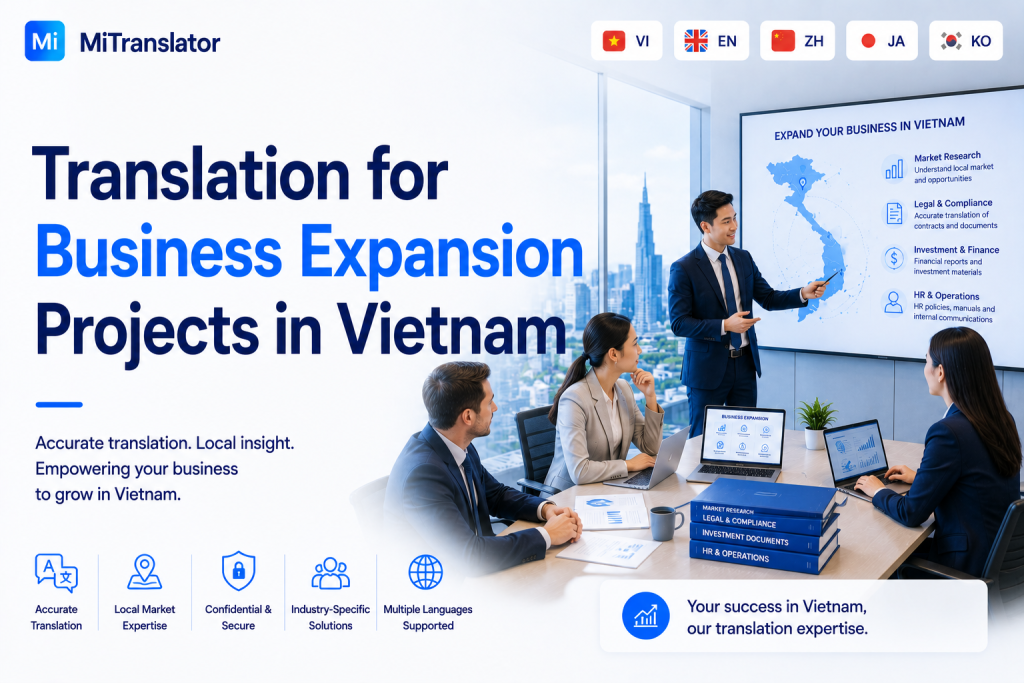
Vietnam has emerged as one of Asia’s most attractive destinations for foreign direct investment (FDI), manufacturing relocation, technology development, and regional business expansion. Its strategic location, competitive workforce, growing consumer market, and extensive network of free trade agreements continue to attract multinational corporations, investors, and entrepreneurs seeking new growth opportunities.
However, expanding into Vietnam involves navigating a complex regulatory environment, engaging with local authorities, negotiating with business partners, and complying with Vietnamese legal and administrative requirements. Throughout this process, businesses are required to manage a significant volume of documents in both Vietnamese and foreign languages.
Professional translation plays a critical role in supporting business expansion projects in Vietnam. Accurate translation helps companies communicate effectively, satisfy regulatory requirements, reduce operational risks, and accelerate market entry.
Why Translation Is Essential for Business Expansion in Vietnam
When establishing or expanding business operations in Vietnam, organizations must interact with various stakeholders, including:
- Government agencies
- Licensing authorities
- Local partners
- Investors
- Legal advisors
- Financial institutions
- Suppliers
- Customers
- Employees
Most official documentation submitted to Vietnamese authorities must be prepared in Vietnamese or accompanied by a compliant translation.
Likewise, foreign investors often require English or bilingual versions of Vietnamese documents for internal review, due diligence, and decision-making purposes.
Professional translation helps bridge these language gaps while ensuring accuracy and compliance.
Common Business Expansion Activities Requiring Translation
Foreign Direct Investment (FDI) Projects
Foreign investors entering Vietnam often need translated documentation during the investment approval process.
These projects commonly involve:
- Investment registration applications
- Enterprise registration procedures
- Capital contribution documentation
- Shareholder agreements
- Licensing submissions
Establishing Subsidiaries and Branch Offices
Companies opening subsidiaries, branch offices, or representative offices in Vietnam must prepare numerous legal and administrative documents for submission to authorities.
Joint Venture Arrangements
Businesses frequently enter joint ventures with Vietnamese partners to access local expertise, distribution networks, or market opportunities.
Joint venture negotiations and agreements often require bilingual documentation.
Mergers and Acquisitions
Acquisition targets in Vietnam may provide large volumes of legal, financial, operational, and regulatory documentation for review.
Translation is a critical component of due diligence and transaction execution.
Manufacturing Expansion
Manufacturers relocating or expanding production operations into Vietnam often require translation of technical, operational, regulatory, and compliance-related documentation.
Common Documents Requiring Translation
Investment Registration Documents
Foreign investors may need translation of:
- Investment registration certificates
- Project proposals
- Investment applications
- Capital contribution plans
- Investor qualification documents
Enterprise Registration Documents
Business registration procedures frequently require translation of:
- Certificates of incorporation
- Articles of Association
- Corporate resolutions
- Shareholder records
- Company charters
Corporate Governance Documents
Corporate governance records commonly include:
- Board resolutions
- Shareholder resolutions
- Internal regulations
- Corporate policies
- Organizational structures
Contracts and Commercial Agreements
Businesses entering the Vietnamese market often require translation of:
- Distribution agreements
- Service contracts
- Supply agreements
- Joint venture agreements
- Licensing contracts
- Lease agreements
Financial Documents
Investors and regulatory authorities frequently review:
- Financial statements
- Audit reports
- Tax records
- Banking documents
- Funding agreements
Human Resources Documents
Companies hiring local or foreign employees often require translation of:
- Employment contracts
- Internal labor regulations
- Employee handbooks
- Payroll policies
- Work permit documentation
Technical Documentation
Manufacturing, technology, and engineering projects often involve:
- Technical specifications
- Product manuals
- Operating procedures
- Quality control documents
- Safety instructions
Why Accuracy Matters in Expansion Projects
Regulatory Compliance
Vietnamese authorities require accurate documentation during licensing, registration, and compliance procedures.
Translation errors may delay approvals or create compliance concerns.
Investment Decision-Making
Foreign investors rely on translated documents to evaluate legal, financial, and operational risks before committing capital.
Contractual Clarity
Business agreements establish important rights and obligations between parties.
Accurate translation helps prevent misunderstandings and contractual disputes.
Corporate Governance
Multilingual governance documents help directors, shareholders, and investors understand decision-making processes and organizational structures.
Risk Management
Accurate translation supports transparency and reduces the likelihood of costly mistakes during expansion projects.
Common Challenges in Translating Expansion Project Documents
Large Volumes of Documentation
Business expansion projects often generate thousands of pages of documentation across multiple departments.
Specialized Terminology
Expansion-related documents frequently contain terminology relating to:
- Corporate law
- Investment law
- Taxation
- Finance
- Human resources
- Engineering
- Manufacturing
- Regulatory compliance
Tight Project Timelines
Many expansion projects operate under strict deadlines tied to licensing approvals, investment schedules, and operational launch dates.
Multiple Stakeholders
Documentation may be reviewed by government agencies, investors, legal counsel, consultants, and management teams across different countries.
Frequent Revisions
Business expansion projects often involve document updates as negotiations, approvals, and project requirements evolve.
Risks of Poor Translation
Translation errors can create significant operational and financial risks.
Potential consequences include:
- Delayed licensing approvals
- Regulatory compliance issues
- Contract disputes
- Misinterpretation of legal obligations
- Investment delays
- Due diligence complications
- Increased project costs
- Reputational damage
Because expansion projects involve multiple stakeholders and significant investments, translation quality directly affects project outcomes.
Best Practices for Business Expansion Translation
Engage Subject-Matter Experts
Different document types require different expertise.
Legal, financial, technical, and regulatory documents should be translated by specialists familiar with the relevant field.
Establish Terminology Management
Consistent terminology helps maintain accuracy across large volumes of multilingual documentation.
Implement Quality Assurance Procedures
A structured quality process should include:
- Translation
- Editing
- Proofreading
- Terminology review
- Final quality control
Plan Translation Early
Translation requirements should be integrated into project planning from the beginning rather than treated as a last-minute task.
Protect Confidential Information
Expansion projects often involve sensitive business information that must be protected through secure document management procedures.
Industries Driving Business Expansion in Vietnam
Translation services are particularly important for expansion projects in sectors such as:
Manufacturing
Vietnam remains a major destination for manufacturing relocation and supply chain diversification.
Technology
Software companies, IT service providers, and technology investors continue to expand operations in Vietnam.
Renewable Energy
Energy developers frequently require multilingual documentation for licensing, investment, and project development activities.
Real Estate
Commercial, industrial, and residential development projects involve extensive regulatory and contractual documentation.
Healthcare
Healthcare providers and medical device companies often require translation support for licensing, compliance, and operational activities.
Consumer Goods and Retail
Retail brands entering Vietnam rely on multilingual documentation for legal compliance, marketing, and operational setup.
How MITRANS Supports Business Expansion Projects in Vietnam
MITRANS provides professional translation services for businesses expanding into Vietnam and Vietnamese companies expanding internationally.
Our services include translation of:
- Investment registration documents
- Enterprise registration documents
- Company charters
- Corporate governance records
- Contracts and agreements
- Financial statements
- Tax documents
- Human resources documentation
- Technical manuals
- Regulatory submissions
- Due diligence materials
MITRANS combines experienced legal, financial, technical, and corporate translators with rigorous quality assurance processes to support complex business expansion projects.
We support major language pairs including:
- English ↔ Vietnamese
- Chinese ↔ Vietnamese
- Japanese ↔ Vietnamese
- Korean ↔ Vietnamese
- English ↔ Chinese
- English ↔ Japanese
- English ↔ Korean
Our team understands the regulatory, commercial, and operational challenges associated with business expansion in Vietnam and helps organizations communicate effectively throughout every stage of the process.
Frequently Asked Questions
Why is translation important for foreign investors entering Vietnam?
Translation helps investors understand legal, financial, and regulatory documentation while supporting licensing, compliance, and business setup procedures.
What documents are most commonly translated during expansion projects?
Investment certificates, company charters, contracts, financial statements, employment documents, regulatory filings, and technical documentation are among the most frequently translated materials.
Can poor translation delay a business expansion project?
Yes. Translation errors can lead to regulatory issues, contractual misunderstandings, delayed approvals, and increased project costs.
Do expansion projects require certified translations?
Certain government submissions and official documents may require certified or notarized translations depending on regulatory requirements.
How can companies improve translation consistency across large projects?
Using professional translators, terminology databases, and structured quality assurance processes helps maintain consistency across multilingual documentation.
Contact MITRANS for Professional Translation Services
Professional translation plays a critical role in ensuring accuracy, compliance, and effective communication across international business activities. Whether you require translation for legal, financial, technical, corporate, immigration, or regulatory documents, MITRANS is ready to help.
Contact MITRANS today for fast, accurate, and professional translation services tailored to your business and documentation requirements.