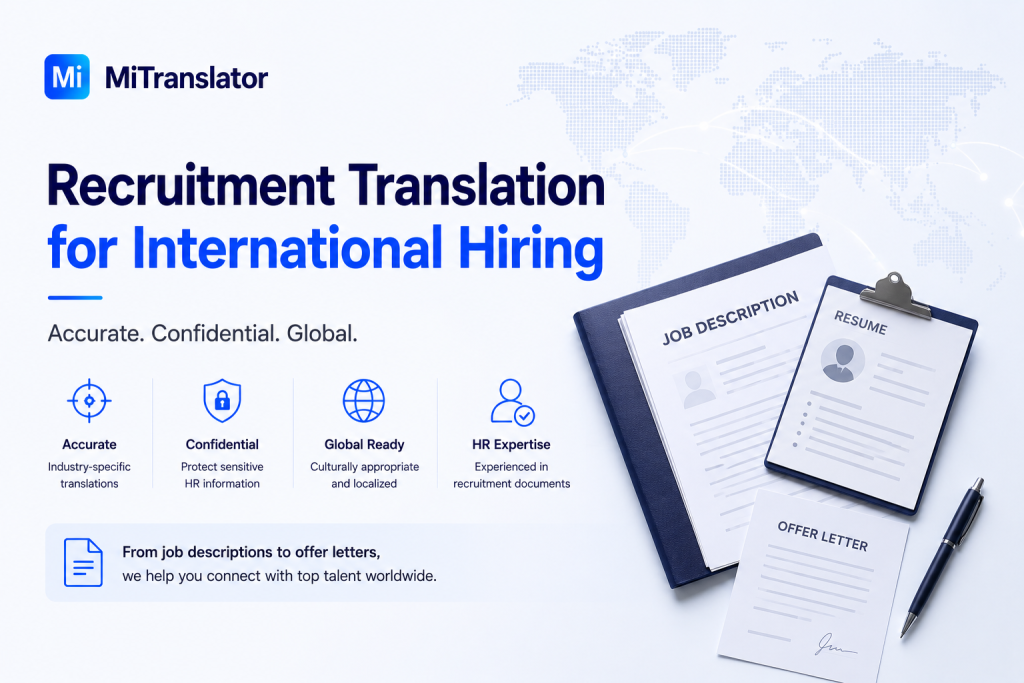
As businesses expand into international markets, the ability to attract, hire, and retain talent across different countries has become a critical competitive advantage. Whether recruiting foreign specialists, building multinational teams, or establishing overseas operations, companies must communicate effectively with candidates from diverse linguistic and cultural backgrounds.
This is where recruitment translation plays an essential role. From job descriptions and employment contracts to onboarding materials and HR policies, accurate translation helps organizations connect with qualified candidates, streamline hiring processes, and create a positive employee experience.
What Is Recruitment Translation?
Recruitment translation refers to the translation of documents and communication materials used throughout the hiring and onboarding process.
Unlike general business translation, recruitment translation requires an understanding of human resources terminology, labor-related language, cultural expectations, and employer branding.
Common recruitment documents requiring translation include:
- Job descriptions
- Job advertisements
- Employment contracts
- Candidate application forms
- Offer letters
- Employee handbooks
- HR policies
- Interview materials
- Onboarding documents
- Training materials
- Internal communications
- Benefits and compensation documents
Professional translation ensures that both employers and candidates clearly understand expectations, responsibilities, and opportunities.
Why Recruitment Translation Matters for International Hiring
Expanding Access to Global Talent
Companies recruiting internationally need to communicate with candidates who may not speak the organization’s primary language.
Providing translated recruitment materials helps attract a larger pool of qualified applicants and improves the overall candidate experience.
Improving Candidate Understanding
Candidates make important career decisions based on information provided during the recruitment process.
Accurate translations help applicants clearly understand:
- Job responsibilities
- Required qualifications
- Salary and benefits
- Working conditions
- Career opportunities
This reduces misunderstandings and improves hiring outcomes.
Supporting Employer Branding
Recruitment materials often serve as a candidate’s first impression of an organization.
Professional translations demonstrate professionalism, inclusivity, and a commitment to international talent.
Reducing Hiring Risks
Poorly translated job descriptions or employment documents can create confusion regarding expectations and contractual obligations.
Accurate translation helps reduce disputes and supports smoother employment relationships.
Documents Commonly Requiring Recruitment Translation
Job Descriptions
Job descriptions are among the most frequently translated recruitment documents.
They typically include:
- Position summaries
- Key responsibilities
- Required qualifications
- Skills requirements
- Reporting structures
- Working conditions
A well-translated job description helps attract the right candidates while reducing unqualified applications.
Job Advertisements
Organizations promoting vacancies across international markets often require multilingual recruitment campaigns.
Translation should preserve both accuracy and marketing appeal to attract qualified candidates.
Employment Contracts
Employment contracts contain legally significant information related to:
- Compensation
- Working hours
- Benefits
- Confidentiality obligations
- Termination conditions
Accurate translation is essential to ensure both parties understand their rights and responsibilities.
Candidate Communications
Recruitment often involves ongoing communication such as:
- Interview invitations
- Assessment instructions
- Offer letters
- Follow-up correspondence
Professional translation helps maintain a positive candidate experience throughout the hiring process.
Onboarding Materials
New employees frequently require translated materials to help them integrate successfully into the organization.
Common onboarding documents include:
- Employee handbooks
- Company policies
- Compliance procedures
- Training materials
- Workplace safety information
Challenges in Recruitment Translation
Human Resources Terminology
HR documents contain specialized language related to employment, compensation, performance management, benefits, and workplace policies.
Translators must understand both HR concepts and legal implications.
Cultural Differences
Recruitment practices vary significantly between countries.
Certain terms, expectations, and workplace concepts may require adaptation to ensure clarity and relevance for the target audience.
Legal and Employment Considerations
Employment laws differ across jurisdictions.
Translators must ensure that legal language is accurately conveyed without altering the intended meaning of employment documents.
Employer Branding Consistency
Recruitment materials should reflect the organization’s culture, values, and employer brand consistently across languages.
Risks of Poor Recruitment Translation
Attracting the Wrong Candidates
Inaccurate job descriptions may create confusion about responsibilities and qualifications, leading to unsuitable applications.
Misunderstandings During Hiring
Candidates who misunderstand employment terms may experience dissatisfaction after joining the organization.
Compliance Issues
Errors in translated employment documentation may create legal or regulatory concerns.
Negative Candidate Experience
Poor communication can damage employer reputation and reduce candidate engagement.
Increased Recruitment Costs
Miscommunication often results in longer hiring cycles, additional interviews, and higher turnover rates.
Best Practices for Recruitment Translation
Work with HR Translation Specialists
Professional translators familiar with recruitment and employment terminology can accurately translate hiring-related content.
Maintain Consistent Terminology
Consistent language across job descriptions, contracts, onboarding materials, and HR policies improves clarity and professionalism.
Adapt Content for Local Markets
Recruitment materials should reflect local cultural expectations and employment practices while maintaining the organization’s core message.
Implement Quality Assurance Processes
A professional recruitment translation workflow should include:
- Translation
- Terminology review
- Editing and proofreading
- Compliance verification
- Final quality assurance review
Protect Candidate and Employee Information
Recruitment documents often contain personal and sensitive information that requires secure handling and confidentiality protection.
Recruitment Translation for International Companies in Vietnam
Vietnam continues to attract foreign investment from countries such as South Korea, Japan, China, Singapore, Germany, and the United States.
Many international companies operating in Vietnam require multilingual recruitment materials to:
- Hire local employees
- Recruit foreign specialists
- Build multicultural teams
- Support workforce expansion
- Improve internal communication
Professional translation helps organizations attract and retain talent while supporting long-term business growth.
How MITRANS Supports Recruitment Translation
MITRANS provides professional recruitment translation services for multinational corporations, HR departments, recruitment agencies, and growing businesses hiring across international markets.
Our services include translation of:
- Job descriptions
- Recruitment advertisements
- Employment contracts
- Offer letters
- Employee handbooks
- HR policies
- Training materials
- Onboarding documentation
- Internal communications
- Benefits and compensation materials
MITRANS supports major language pairs commonly used in international recruitment, including:
- English ↔ Vietnamese
- Korean ↔ Vietnamese
- Japanese ↔ Vietnamese
- Chinese ↔ Vietnamese
Our experienced translators combine linguistic expertise with knowledge of HR terminology and employment practices to deliver accurate, professional translations.
Frequently Asked Questions
Why is recruitment translation important?
Recruitment translation helps organizations communicate clearly with international candidates, improve hiring outcomes, and support workforce diversity.
Can MITRANS translate employment contracts?
Yes. MITRANS provides professional translation services for employment contracts, HR documentation, and recruitment-related materials.
How does MITRANS ensure accuracy?
We use experienced translators, terminology management systems, and multi-step quality assurance processes to maintain consistency and accuracy.
Can recruitment materials be localized for different markets?
Yes. We can adapt recruitment content to reflect local language preferences and cultural expectations while preserving the original message.
Is candidate information kept confidential?
Absolutely. MITRANS follows strict confidentiality procedures and secure document management practices to protect sensitive information.
Contact MITRANS for Recruitment Translation Services
Accurate recruitment translation is essential for attracting international talent, supporting global hiring initiatives, and building successful multicultural teams. If your organization requires professional translation of job descriptions, employment contracts, onboarding materials, HR policies, or other recruitment-related documents, MITRANS is ready to support you.
Contact MITRANS today for fast, accurate, and professional recruitment translation services tailored to your international hiring needs.