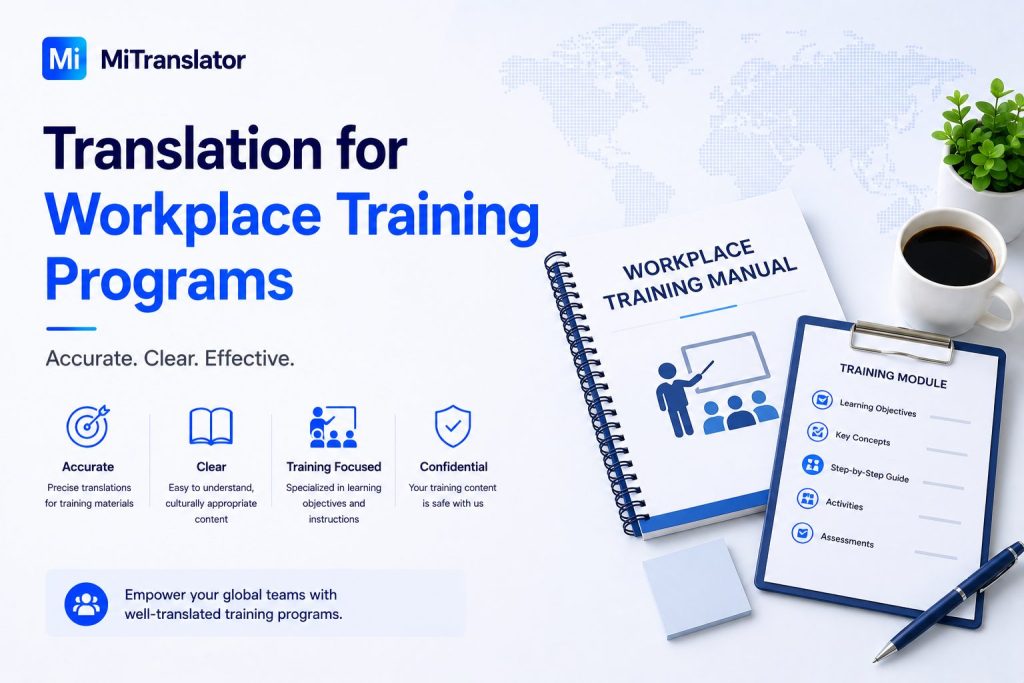
As businesses expand internationally and workforces become increasingly diverse, effective employee training has become more important than ever. Organizations invest significant resources in workplace training programs to improve employee performance, enhance safety, maintain compliance, and support long-term business growth. However, training can only be effective when employees fully understand the information being presented.
For companies operating in multilingual environments, professional translation for workplace training programs is essential. Accurate translation helps ensure that employees receive consistent training regardless of language barriers, improving learning outcomes and supporting organizational success.
Why Workplace Training Translation Matters
Training programs are designed to help employees develop the knowledge and skills needed to perform their jobs effectively. When training materials are not available in a language employees understand, important information may be misunderstood or overlooked.
Professional training translation helps organizations:
- Improve employee understanding
- Increase training effectiveness
- Support workplace safety
- Maintain compliance with regulations
- Standardize knowledge across teams
- Improve employee engagement
- Reduce operational risks
- Accelerate onboarding and skill development
For multinational organizations, translated training materials help create a more inclusive and productive workplace.
What Is Workplace Training Translation?
Workplace training translation involves translating educational and instructional materials used to train employees, managers, contractors, and other personnel.
Unlike general translation, training translation requires consideration of learning objectives, industry terminology, audience needs, and cultural differences.
Common training materials requiring translation include:
- Employee onboarding programs
- Training manuals
- Standard Operating Procedures (SOPs)
- Work instructions
- Safety training materials
- Compliance training programs
- Human resources training documents
- Technical training guides
- E-learning content
- Presentation slides
- Assessment materials
- Employee handbooks
The goal is not simply to translate words but to ensure that learning objectives remain clear and effective in the target language.
Types of Workplace Training Programs That Commonly Require Translation
Employee Onboarding Programs
Onboarding materials help new employees understand company policies, workplace expectations, and organizational culture.
Common onboarding documents include:
- Orientation materials
- Employee handbooks
- HR policies
- Company introductions
- Workplace guidelines
Providing translated onboarding materials helps new hires integrate more quickly and confidently.
Safety Training Programs
Workplace safety is a major priority across industries.
Safety training materials often include:
- Emergency response procedures
- Hazard communication programs
- Personal protective equipment (PPE) instructions
- Equipment safety guidelines
- Accident prevention training
Accurate translation is critical because misunderstandings can directly affect employee safety.
Technical and Operational Training
Manufacturing, engineering, logistics, and industrial companies frequently train employees on specialized equipment and processes.
Examples include:
- Equipment operation manuals
- Machine setup procedures
- Production processes
- Maintenance instructions
- Quality control procedures
Professional translation helps ensure technical accuracy and operational consistency.
Compliance Training
Organizations often provide training related to:
- Labor regulations
- Data privacy requirements
- Information security
- Anti-corruption policies
- Industry-specific compliance standards
Accurate translation helps employees understand their responsibilities and supports regulatory compliance.
Leadership and Professional Development Programs
Many organizations invest in management training and professional development initiatives.
These programs may cover:
- Leadership skills
- Communication techniques
- Team management
- Customer service
- Business processes
Translation helps organizations provide consistent development opportunities across international teams.
Industries That Benefit from Training Translation
Manufacturing
Factories often employ multilingual workforces and require translated training materials for production, quality control, and safety programs.
Healthcare
Healthcare organizations frequently translate training content related to clinical procedures, patient safety, and regulatory compliance.
Technology
Technology companies often provide multilingual technical training and software-related instruction.
Logistics and Transportation
Training materials related to operations, warehouse management, and transportation safety frequently require translation.
Construction and Engineering
Construction companies often need translated safety training, technical procedures, and equipment instructions for multinational teams.
Common Challenges in Training Program Translation
Industry-Specific Terminology
Training materials often contain technical vocabulary that requires specialized expertise.
Examples include:
- Manufacturing terminology
- Medical terminology
- Engineering concepts
- Legal and compliance language
- Information technology terminology
Cultural Adaptation
Training programs may contain examples, scenarios, and communication styles that require cultural adaptation to remain effective.
Consistency Across Materials
Large organizations often maintain extensive training libraries.
Terminology must remain consistent across:
- Manuals
- Presentations
- SOPs
- Videos
- Assessments
- E-learning modules
Maintaining Learning Effectiveness
The translated content should be just as clear and engaging as the original training material.
Risks of Poorly Translated Training Materials
Reduced Learning Outcomes
Employees may struggle to understand key concepts if training materials are unclear or inaccurate.
Workplace Safety Incidents
Misunderstood safety instructions can increase the risk of accidents and injuries.
Compliance Violations
Poorly translated compliance training may result in employees failing to meet regulatory requirements.
Operational Errors
Employees who misunderstand procedures are more likely to make mistakes that affect quality and productivity.
Increased Training Costs
Organizations may need to spend additional time and resources retraining employees when training materials are ineffective.
Best Practices for Workplace Training Translation
Use Specialized Translators
Training content should be translated by professionals familiar with the subject matter and target audience.
Focus on Clarity
Training materials should prioritize clear and simple communication to maximize understanding.
Maintain Consistent Terminology
Approved glossaries and translation memories help ensure consistency across training programs.
Implement Quality Assurance Processes
A professional training translation workflow should include:
- Translation
- Terminology review
- Editing and proofreading
- Formatting verification
- Final quality assurance review
Adapt Content for Local Audiences
Where appropriate, examples and references should be localized to improve learner engagement and understanding.
How Training Translation Supports International Businesses
For multinational companies, translated training programs provide several benefits:
- Faster employee onboarding
- Improved workforce productivity
- Greater operational consistency
- Better compliance management
- Enhanced employee engagement
- Reduced communication barriers
- Stronger workplace safety performance
These advantages contribute directly to organizational efficiency and business growth.
How MITRANS Supports Workplace Training Translation
MITRANS provides professional translation services for workplace training programs across a wide range of industries.
Our services include translation of:
- Employee training manuals
- Onboarding materials
- SOPs and work instructions
- Safety training documentation
- Compliance training materials
- Technical training programs
- HR and management training content
- E-learning materials
- Presentation slides
- Employee handbooks
MITRANS supports major language pairs commonly used in international business environments, including:
- English ↔ Vietnamese
- Korean ↔ Vietnamese
- Japanese ↔ Vietnamese
- Chinese ↔ Vietnamese
Our experienced translators combine language expertise with industry knowledge to ensure accurate, effective, and professional training translations.
Frequently Asked Questions
Why is workplace training translation important?
Training translation helps employees understand critical information, improves learning outcomes, and supports workplace safety and compliance.
Can MITRANS translate technical training materials?
Yes. MITRANS regularly translates technical manuals, SOPs, operational procedures, and industry-specific training programs.
How does MITRANS ensure terminology consistency?
We use terminology databases, translation memories, and multi-level review processes to maintain consistency across all training materials.
Can training materials be localized for different audiences?
Yes. We can adapt content where appropriate to improve clarity and relevance for local employees.
Is confidential company information protected?
Absolutely. MITRANS follows strict confidentiality procedures and secure document management practices to safeguard client information.
Contact MITRANS for Workplace Training Program Translation Services
Accurate translation of workplace training programs is essential for employee development, operational efficiency, workplace safety, and regulatory compliance. If your organization requires professional translation of onboarding materials, training manuals, SOPs, compliance courses, technical documentation, or other educational content, MITRANS is ready to support you.
Contact MITRANS today for fast, accurate, and professional workplace training translation services tailored to your industry and workforce needs.