
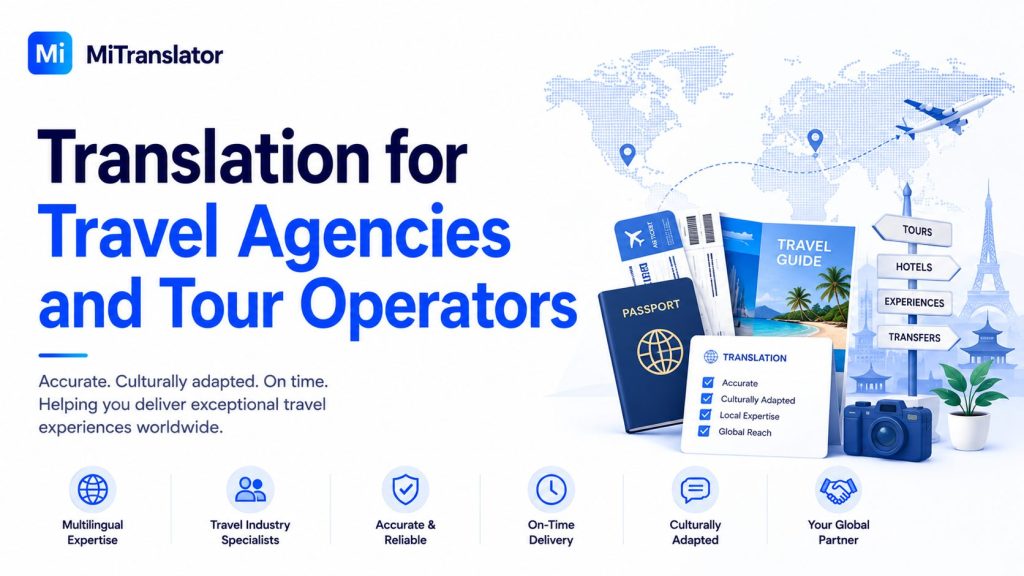
The global tourism industry depends heavily on effective communication. Travelers research destinations online, compare tour packages, read travel guides, book accommodations, and seek support in languages they understand. For travel agencies and tour operators serving international customers, language barriers can directly affect customer experience, booking conversions, and brand reputation.
As Vietnam and other destinations continue attracting visitors from around the world, travel businesses must ensure that their websites, brochures, itineraries, booking platforms, and customer communications are accessible to multilingual audiences. Professional translation helps travel companies engage international travelers, build trust, and expand into new markets.
This article explores the importance of translation for travel agencies and tour operators, common challenges businesses face, best practices for multilingual travel content, and how professional language services can support international tourism growth.
What Is Translation for Travel Agencies and Tour Operators?
Translation for travel agencies and tour operators involves adapting tourism-related content from one language into another while maintaining accuracy, cultural relevance, and marketing appeal.
Travel businesses produce a wide range of customer-facing content, including:
- Tour package descriptions
- Travel itineraries
- Destination guides
- Travel brochures
- Booking platform content
- Hotel and accommodation information
- Transportation details
- Travel insurance documents
- Customer support materials
- Marketing campaigns
- Website content
- Mobile travel applications
Unlike technical or legal translation, tourism translation often combines informational content with persuasive marketing language. The goal is not only to inform travelers but also to inspire them to book a trip.
Successful travel translation requires localization, ensuring that content resonates with the cultural preferences, expectations, and travel habits of different audiences.
For example, travelers from Japan, South Korea, Germany, and the United States may respond differently to promotional messages, travel recommendations, and booking information. Localization helps travel businesses create content that feels natural and engaging for each market.
Why Translation Matters for Travel Businesses
Attracts International Travelers
Most travelers prefer to research and book travel services in their native language. Providing multilingual content makes destinations and travel packages more accessible to international customers.
Businesses that offer translated content can reach wider audiences and increase booking opportunities.
Improves Customer Experience
Travelers rely on accurate information when planning trips. Clear translations help customers understand tour schedules, accommodation details, transportation arrangements, and booking conditions.
Better communication leads to greater customer satisfaction.
Builds Trust and Credibility
Professional translations demonstrate that a travel company values international customers. Well-translated websites and marketing materials create a more professional image and help build traveler confidence.
Increases Online Visibility
Multilingual websites can improve search engine visibility in different markets. Localized travel content helps businesses attract organic traffic from international travelers searching in their native languages.
Reduces Misunderstandings
Translation errors can lead to incorrect expectations regarding tour activities, pricing, cancellation policies, or travel arrangements. Accurate translation minimizes confusion and customer complaints.
Supports Market Expansion
For travel agencies looking to enter new markets, translation is a key component of international growth. Multilingual content helps businesses connect with customers in target regions more effectively.
Common Challenges in Travel Translation
Literal Translation of Marketing Content
Tourism marketing often relies on emotion, storytelling, and persuasive language. Direct translations may sound unnatural or fail to inspire potential travelers.
Localization is often necessary to preserve the intended impact.
Cultural Differences
Different cultures have unique travel preferences and expectations. Content that appeals to one audience may not resonate with another.
Travel businesses must adapt messaging to suit local cultural contexts.
Inconsistent Destination Terminology
Place names, attraction descriptions, and tourism terminology must remain consistent across all materials.
Inconsistencies can confuse travelers and reduce trust in the information provided.
Frequent Content Updates
Tour packages, schedules, pricing, and travel regulations often change. Keeping multilingual content updated can be challenging, particularly for agencies offering numerous travel products.
Complex Booking Information
Travel content frequently includes:
- Pricing details
- Cancellation policies
- Travel restrictions
- Visa requirements
- Insurance information
Errors in these areas can result in customer dissatisfaction and operational issues.
Managing Multiple Languages
Travel businesses targeting international audiences often need content in several languages simultaneously, requiring efficient translation workflows and quality control processes.
Best Practices for Travel Agency and Tour Operator Translation
Prioritize Customer-Facing Content
Focus first on content that directly influences traveler decisions, such as:
- Websites
- Tour descriptions
- Booking pages
- Travel brochures
- Promotional materials
These materials often have the greatest impact on customer acquisition.
Invest in Localization
Localization adapts content to cultural expectations rather than simply translating words.
Consider:
- Local travel preferences
- Cultural references
- Date and time formats
- Currency displays
- Measurement units
Localization creates a more natural user experience.
Maintain Consistent Terminology
Develop multilingual glossaries for:
- Destination names
- Tour activities
- Accommodation types
- Transportation services
- Tourism-related terminology
Consistency strengthens professionalism and improves customer understanding.
Use Professional Tourism Translators
Travel content combines marketing, customer service, and operational information. Experienced tourism translators understand how to balance accuracy with persuasive communication.
Optimize Multilingual SEO
For travel websites, translation should support search engine optimization.
This includes:
- Localized keywords
- Meta descriptions
- Page titles
- Destination-specific search terms
SEO localization helps attract international visitors through organic search.
Establish Review Processes
Implement quality assurance procedures to ensure accuracy, consistency, and readability across all languages.
Translation Checklist for Travel Businesses
Before publishing multilingual travel content, verify that:
- Destination information is accurate.
- Marketing messages are culturally appropriate.
- Tour descriptions are clearly translated.
- Booking information is consistent.
- Pricing and policies are accurate.
- SEO elements are localized.
- Quality assurance reviews have been completed.
How MITRANS Can Help
Travel companies need more than simple translation. They require localized content that engages international travelers, supports bookings, and accurately communicates important travel information.
MITRANS provides professional translation and localization services tailored to travel agencies, tour operators, hospitality providers, and tourism organizations.
Our services include:
- Travel website translation
- Tour package translation
- Travel brochure localization
- Destination guide translation
- Booking platform localization
- Travel app translation
- Tourism marketing translation
- Hotel and accommodation content translation
- Multilingual SEO localization
- Customer support content translation
Our experienced linguists understand the unique requirements of the tourism industry and help businesses communicate effectively with travelers from around the world.
With expertise in English, Vietnamese, Chinese, Japanese, Korean, German, French, and many other languages, MITRANS helps travel companies expand their global reach and improve customer experiences across international markets.
Frequently Asked Questions About Travel Translation
Why is translation important for travel agencies?
Translation helps travel agencies communicate effectively with international travelers, improve customer experiences, increase bookings, and expand into new markets.
Which travel materials should be translated?
Common materials include websites, tour descriptions, itineraries, brochures, booking platforms, customer support content, and marketing campaigns.
What is the difference between translation and localization in tourism?
Translation converts content into another language, while localization adapts it to suit the cultural preferences and expectations of a specific audience.
Can multilingual websites improve tourism bookings?
Yes. Travelers are more likely to trust and book services from websites that provide information in their native language.
Why should travel businesses use professional translators?
Professional tourism translators ensure that travel content is accurate, engaging, culturally appropriate, and optimized for international audiences.
Need Travel Translation and Localization Support?
Looking to attract more international travelers and improve the customer experience across global markets?
Contact MITRANS today for fast, accurate, and professional translation and localization services for travel agencies, tour operators, tourism organizations, and hospitality businesses worldwide.