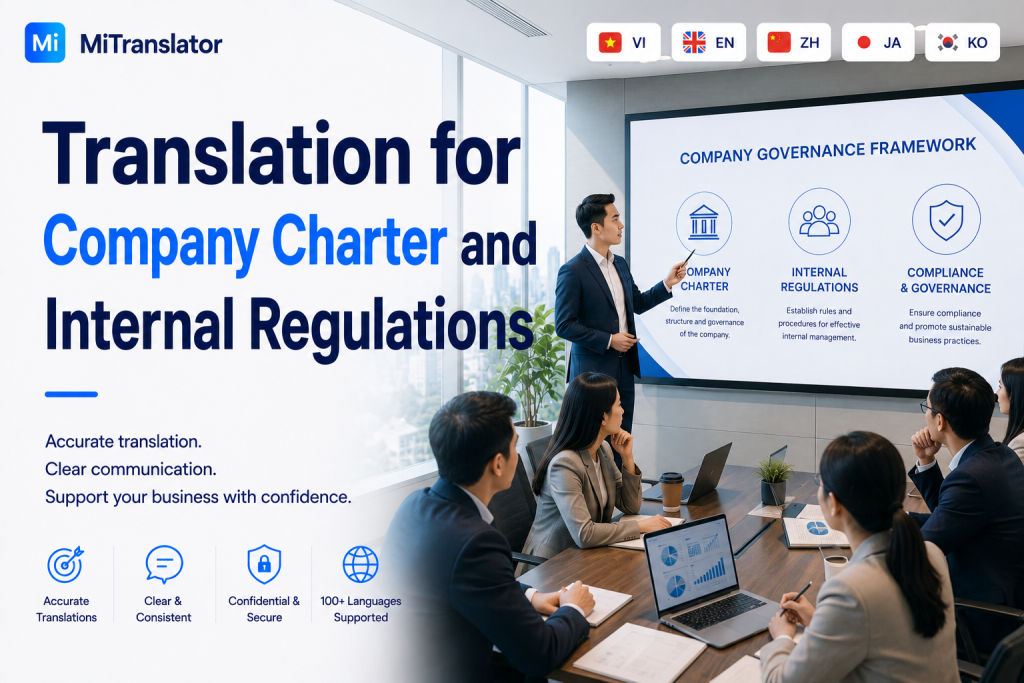
A company’s charter and internal regulations serve as the foundation of its governance framework, operational procedures, and compliance structure. These documents define how an organization is managed, how decisions are made, and how directors, executives, employees, and shareholders fulfill their respective responsibilities.
As businesses expand internationally, establish foreign-invested entities, enter joint ventures, attract overseas investors, or operate across multiple jurisdictions, company charters and internal regulations often need to be translated for regulators, shareholders, legal advisors, auditors, financial institutions, and business partners.
Because these documents contain legally significant provisions that govern corporate operations and compliance obligations, accurate translation is essential. Errors or inconsistencies may create misunderstandings regarding governance structures, management authority, shareholder rights, or internal control procedures, potentially exposing the company to legal and operational risks.
What Are Company Charters and Internal Regulations?
A company charter is a governing document that establishes the legal structure, purpose, ownership framework, and operating principles of a business.
Internal regulations are policies and rules adopted by an organization to govern internal operations, management responsibilities, employee conduct, decision-making processes, and compliance requirements.
Together, these documents create a framework for corporate governance and organizational accountability.
They are commonly reviewed during:
- Company formation
- Foreign investment transactions
- Regulatory inspections
- Corporate restructuring
- Mergers and acquisitions
- Due diligence reviews
- Internal audits
- Banking compliance procedures
- Licensing applications
Why Translation of Company Charters and Internal Regulations Matters
Supporting International Business Expansion
Companies entering foreign markets often need to provide translated governance documents to government authorities, licensing agencies, and business partners.
Accurate translation helps facilitate regulatory approvals and business registration procedures.
Facilitating Foreign Investment
Investors commonly review company charters and internal regulations to understand governance structures, management authority, voting rights, and compliance controls before making investment decisions.
Professional translation enables stakeholders to evaluate these matters accurately.
Ensuring Regulatory Compliance
Many jurisdictions require translated governance documents when foreign companies establish subsidiaries, representative offices, or branch operations.
Accurate translations help organizations meet local legal and administrative requirements.
Supporting Corporate Due Diligence
Company charters and internal policies are frequently reviewed during investment transactions, financing activities, and corporate audits.
Translation helps legal advisors, investors, and auditors assess governance practices and potential risks.
Improving Multinational Governance
Organizations operating across multiple countries often require multilingual governance documentation to ensure consistent understanding among directors, executives, shareholders, and employees.
Common Company Charter Provisions Requiring Translation
Company Objectives
The charter typically defines the business purpose, activities, and operational scope of the organization.
Ownership Structure
Ownership-related provisions may include:
- Share capital
- Share classes
- Ownership percentages
- Capital contributions
- Shareholder rights
Governance Structure
The charter commonly outlines:
- Board composition
- Director authority
- Executive responsibilities
- Shareholder powers
- Voting procedures
Decision-Making Processes
Corporate decision-making mechanisms often include provisions relating to:
- Board resolutions
- Shareholder approvals
- Voting thresholds
- Quorum requirements
Profit Distribution
Many company charters contain provisions regarding dividend declarations and profit allocation.
Amendment Procedures
The charter generally establishes procedures for modifying governance provisions and corporate structures.
Common Internal Regulations Requiring Translation
Employee Handbooks
Organizations frequently translate employee policies for multinational workforces.
Code of Conduct Policies
These documents establish ethical standards and behavioral expectations throughout the organization.
Compliance Policies
Compliance frameworks help organizations manage legal, regulatory, and operational obligations.
Internal Control Procedures
Internal control policies support risk management and financial accountability.
Human Resources Policies
These regulations often govern:
- Recruitment
- Compensation
- Performance management
- Workplace conduct
- Employee benefits
Information Security Policies
Many businesses maintain internal regulations governing data protection, cybersecurity, and information management practices.
Procurement and Approval Procedures
Organizations frequently establish internal approval workflows and procurement guidelines that require translation for international operations.
Common Challenges in Translating Governance Documents
Complex Legal and Corporate Terminology
Company charters and internal regulations contain specialized terminology relating to:
- Corporate governance
- Shareholder rights
- Management authority
- Regulatory compliance
- Internal controls
Accurate translation requires both linguistic expertise and subject-matter knowledge.
Differences Between Legal Systems
Corporate governance frameworks vary significantly across jurisdictions.
Certain legal concepts may not have direct equivalents in another language or legal system.
Maintaining Consistency
Governance documents frequently contain recurring references to:
- Company entities
- Management positions
- Departments
- Committees
- Policies
- Procedures
Consistency is essential to avoid confusion.
High Consequence of Errors
Governance documents influence corporate decision-making and compliance activities.
Even minor translation mistakes may affect interpretation of rights, obligations, and responsibilities.
Confidential Information
These documents often contain sensitive information relating to management structures, strategic controls, and internal business operations.
Risks of Poor Translation
Inaccurate translations can expose businesses to significant legal and operational risks.
Potential consequences include:
- Regulatory compliance issues
- Misinterpretation of governance provisions
- Internal management disputes
- Delayed regulatory approvals
- Investor concerns
- Due diligence complications
- Increased legal expenses
- Reputational risks
Because governance documents serve as authoritative references within the organization, translation quality directly affects corporate transparency and accountability.
Best Practices for Translating Company Charters and Internal Regulations
Engage Legal and Corporate Governance Specialists
Translation should be performed by professionals familiar with corporate law, governance structures, and compliance terminology.
Establish Terminology Standards
A glossary of approved corporate terminology helps maintain consistency throughout all governance documentation.
Understand the Organizational Context
Translators should understand the company’s governance framework and business structure before beginning the project.
Preserve Legal Meaning
The primary objective is to maintain the legal effect and operational intent of the original document.
Maintain Original Structure
Headings, numbering systems, references, and document hierarchy should remain consistent with the source document.
Implement Comprehensive Quality Assurance
Effective quality control should include:
- Translation
- Editing
- Proofreading
- Terminology review
- Final compliance verification
Protect Confidential Information
Secure document management and confidentiality procedures are essential when handling governance-related materials.
Industries That Commonly Require Governance Document Translation
Translation of company charters and internal regulations is frequently required by:
- Foreign-invested enterprises
- Multinational corporations
- Financial institutions
- Technology companies
- Manufacturing businesses
- Healthcare organizations
- Energy companies
- Real estate developers
- Logistics providers
- Professional service firms
These organizations often need multilingual governance documentation to support compliance and international operations.
How MITRANS Supports Governance Document Translation
MITRANS provides professional translation services for company charters, internal regulations, and corporate governance documentation.
Our services include translation of:
- Company charters
- Articles of Association
- Internal regulations
- Corporate governance policies
- Employee handbooks
- Compliance policies
- Internal control procedures
- Board governance documents
- Shareholder governance records
- Corporate policy manuals
MITRANS combines experienced legal translators, corporate governance expertise, and rigorous quality assurance procedures to deliver accurate, consistent, and confidential translations.
We support major language pairs including:
- English ↔ Vietnamese
- Chinese ↔ Vietnamese
- Japanese ↔ Vietnamese
- Korean ↔ Vietnamese
- English ↔ Chinese
- English ↔ Japanese
- English ↔ Korean
Our team helps organizations maintain governance consistency and regulatory compliance across international markets.
Frequently Asked Questions
Why do businesses translate company charters?
Company charters are commonly translated for foreign investment projects, regulatory filings, international expansion, banking compliance, and corporate transactions.
Are internal regulations legally important?
Yes. Internal regulations often establish operational procedures, compliance obligations, and management responsibilities throughout the organization.
Can translated governance documents be used for regulatory submissions?
In many cases, yes. Depending on the jurisdiction, certified or notarized translations may be required.
What is the biggest challenge in translating governance documents?
Complex legal terminology, governance concepts, and maintaining consistency across multiple corporate records are among the most significant challenges.
How can organizations ensure translation accuracy?
Working with experienced legal translation specialists and applying comprehensive quality assurance procedures helps maintain accuracy and consistency.
Contact MITRANS for Professional Translation Services
Professional translation plays a critical role in ensuring accuracy, compliance, and effective communication across international business activities. Whether you require translation for legal, financial, technical, corporate, immigration, or regulatory documents, MITRANS is ready to help.
Contact MITRANS today for fast, accurate, and professional translation services tailored to your business and documentation requirements.