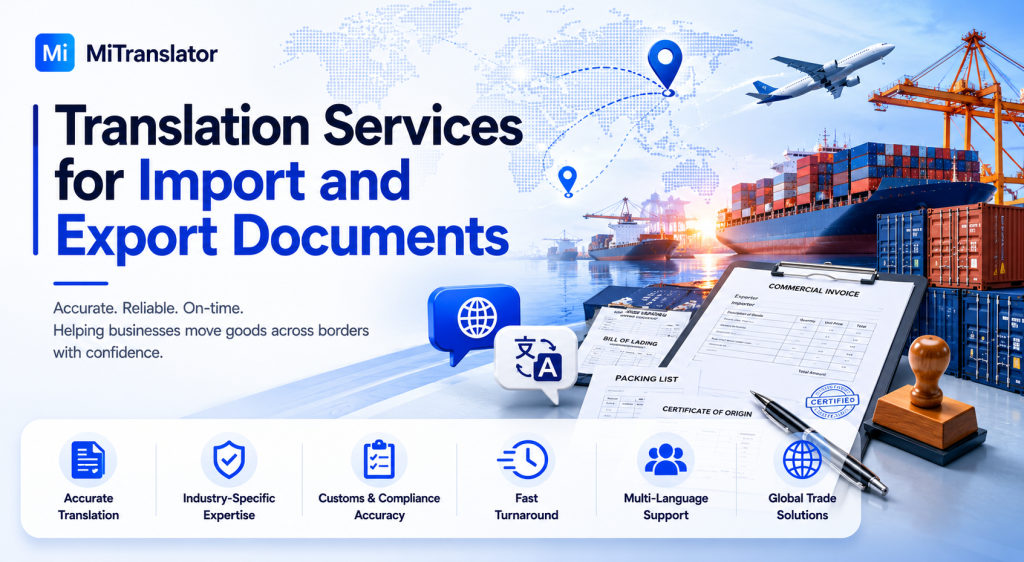
As global trade continues expanding across Vietnam and international markets, accurate translation for import and export documents has become essential for smooth cross-border operations. Businesses involved in manufacturing, logistics, trading, procurement, and international shipping rely heavily on multilingual documentation to communicate with suppliers, customs authorities, logistics providers, and overseas partners.
Even small translation mistakes in import-export documentation can lead to:
- Customs delays
- Shipment issues
- Compliance problems
- Financial losses
- Miscommunication between international partners
For companies operating in Vietnam’s growing international trade environment, professional document translation plays a critical role in maintaining operational efficiency and reducing business risk.
In this article, we explore why import-export document translation matters, common challenges businesses face, and how professional localization workflows support international trade operations.
Why Import and Export Document Translation Matters
International Trade Requires Accurate Documentation
Import-export operations involve communication between:
- Manufacturers
- Suppliers
- Customs authorities
- Shipping companies
- Freight forwarders
- International buyers
- Logistics providers
Accurate multilingual documentation helps businesses avoid delays and maintain compliance across international markets.
Customs and Compliance Processes Depend on Clarity
Trade documentation often contains:
- Technical product information
- Legal terminology
- Shipping instructions
- Commercial details
- Regulatory information
Translation errors may create:
- Customs clearance problems
- Incorrect declarations
- Shipment rejection
- Regulatory complications
Professional translation helps reduce operational risk.
Global Supply Chains Require Multilingual Coordination
Modern supply chains frequently involve:
- Multiple countries
- Different languages
- International logistics systems
- Cross-border procurement workflows
Professional translation improves communication efficiency across global operations.
Common Import and Export Documents That Require Translation
Businesses commonly translate:
- Commercial invoices
- Packing lists
- Bills of lading
- Certificates of origin
- Customs declarations
- Purchase orders
- Shipping instructions
- Technical specifications
- Product descriptions
- Compliance documents
- Inspection reports
- Trade contracts
- Import/export licenses
These documents often require highly accurate terminology and formatting consistency.
Common Challenges in Import-Export Translation
Industry-Specific Terminology
Import-export documentation includes specialized terminology related to:
- International shipping
- Customs procedures
- Trade regulations
- Logistics operations
- Product classification
- Manufacturing specifications
Incorrect terminology can create serious operational issues.
Formatting and Documentation Consistency
Trade documents often follow strict formatting requirements.
Businesses must maintain:
- Consistent terminology
- Accurate product descriptions
- Proper document structure
- Clear multilingual communication
Inconsistent translation may create confusion during customs or shipping processes.
Fast Turnaround Requirements
Import-export workflows often operate under tight deadlines.
Businesses may need urgent translation for:
- Shipment releases
- Customs clearance
- Supplier coordination
- International procurement
Translation workflows must balance speed with accuracy.
AI Translation Limitations
AI-assisted translation improves efficiency, but raw machine translation may:
- Misinterpret trade terminology
- Produce inconsistent wording
- Create formatting issues
- Miss legal or compliance context
Human review remains essential for trade documentation.
What Professional Import-Export Translation Services Include
Technical and Commercial Translation
Professional services support:
- Shipping documentation
- Customs paperwork
- Trade agreements
- Logistics communication
- Product specifications
- Procurement workflows
Accurate terminology is critical for operational clarity.
Human QA Review
Professional review helps ensure:
- Document accuracy
- Consistent terminology
- Proper formatting
- Compliance clarity
- Natural multilingual communication
Human QA is especially important for customs-sensitive documentation.
Translation Memory and Terminology Management
Structured localization workflows often include:
- Translation memory systems
- Trade terminology databases
- Approved glossaries
- Consistency management
These systems improve efficiency across recurring trade workflows.
Scalable Workflow Support
Large import-export operations often require:
- Continuous document translation
- Multi-language coordination
- Fast project turnaround
- Centralized localization management
Scalable workflows improve operational reliability.
Industries That Frequently Need Import-Export Translation
Translation services for import-export documents are widely used by:
- Manufacturing companies
- Logistics providers
- Freight forwarding companies
- Trading businesses
- E-commerce exporters
- Industrial suppliers
- Automotive companies
- Electronics manufacturers
- Textile exporters
- International procurement teams
These industries frequently manage multilingual global supply chain operations.
Best Practices for Import-Export Document Translation
Use Professional Trade Terminology
Import-export translation requires:
- Industry expertise
- Customs terminology knowledge
- Logistics workflow understanding
General translation may not be sufficient for international trade documentation.
Maintain Consistent Product Descriptions
Businesses should standardize:
- Product terminology
- Shipping descriptions
- Technical specifications
- Trade documentation language
Consistency improves customs and logistics efficiency.
Combine AI Translation With Human Review
Modern workflows work best when combining:
- AI-assisted translation
- Human QA review
- Translation memory systems
- Terminology management
This improves both speed and operational accuracy.
Centralize Trade Documentation Workflows
Centralized systems help businesses:
- Reduce translation inconsistencies
- Improve collaboration
- Accelerate document processing
- Scale international operations more effectively
How MITRANS Supports Import and Export Businesses
MITRANS Translator provides translation and localization services for import-export businesses operating across Vietnam and international markets.
Our services include:
- Import-export document translation
- Customs documentation translation
- Logistics communication support
- Technical specification translation
- AI-assisted translation
- Human QA review
- Translation memory management
- Terminology management
- Enterprise multilingual workflows
MITRANS supports multiple language pairs, including:
- English ↔ Vietnamese
- Chinese ↔ Vietnamese
- Japanese ↔ Vietnamese
- Korean ↔ Vietnamese
- French ↔ Vietnamese
By combining professional linguistic expertise with structured localization workflows and quality-controlled review systems, MITRANS helps businesses manage international trade communication more efficiently and accurately.
Frequently Asked Questions
Why is accurate translation important for import-export documents?
Translation errors can lead to customs delays, shipment issues, compliance problems, and operational disruptions.
What documents commonly require import-export translation?
Commercial invoices, packing lists, bills of lading, certificates of origin, customs declarations, and logistics documentation commonly require translation.
Is AI translation enough for trade documentation?
AI translation improves speed, but professional human review remains essential for terminology accuracy, formatting consistency, and compliance clarity.
Does MITRANS support import-export document translation?
Yes. MITRANS provides translation services for customs paperwork, logistics communication, shipping documents, and multilingual trade operations.
Conclusion
As international trade operations continue growing across Vietnam and global markets, professional translation for import and export documents has become essential for smooth communication, customs compliance, and supply chain efficiency.
From shipping paperwork and customs declarations to technical specifications and procurement workflows, accurate localization helps businesses reduce operational risk and support global trade growth.
Need Vietnamese Translation or Localization Support?
MITRANS helps global businesses manage multilingual communication, localization, and Vietnamese market operations with quality-controlled translation workflows.
Contact MITRANS Translator today for fast, accurate, and professional language solutions tailored to your business.