Organizations increasingly operate across multiple countries, languages, and regulatory environments. As businesses expand internationally, they often need to translate contracts, financial records, legal agreements, technical documentation, internal policies, and other sensitive materials to support global operations and cross-border communication.
While translation accuracy is essential, document security is equally important. Secure document translation services help organizations protect confidential business information throughout the translation process while ensuring that critical content remains accurate, consistent, and compliant with industry requirements.
What Is Secure Document Translation?
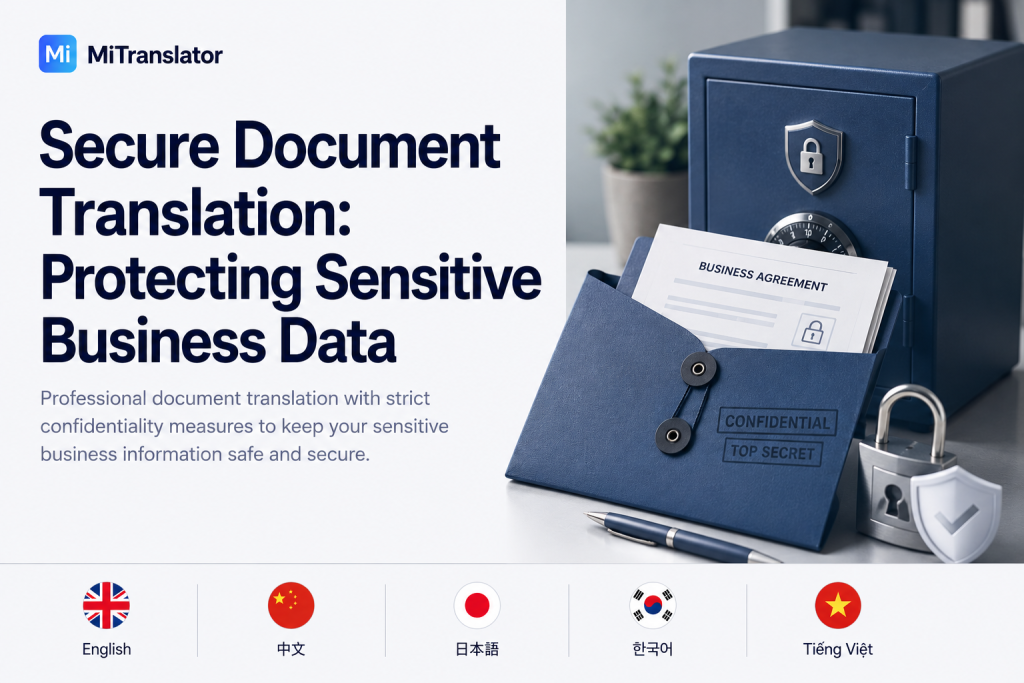
Secure document translation refers to the translation of sensitive, confidential, or proprietary information using processes designed to protect data privacy, confidentiality, and information security.
Unlike standard document translation, secure document translation involves additional safeguards to prevent unauthorized access, disclosure, modification, or misuse of sensitive information.
Common confidential documents requiring secure translation include:
- Legal contracts and agreements
- Financial statements
- Corporate governance documents
- Mergers and acquisitions documentation
- Intellectual property records
- Technical specifications
- Product development documentation
- Human resources records
- Compliance documentation
- Internal policies and procedures
- Regulatory filings
- Customer and supplier agreements
These documents often contain information that could expose organizations to legal, financial, operational, or reputational risks if improperly handled.
Why Secure Document Translation Matters
Protecting Confidential Business Information
Many business documents contain proprietary information, trade secrets, strategic plans, pricing structures, and commercially sensitive data.
Secure translation processes help reduce the risk of unauthorized disclosure.
Supporting Regulatory Compliance
Organizations operating in regulated industries must often comply with data protection, privacy, and confidentiality requirements.
Secure document translation helps support compliance with applicable legal and regulatory obligations.
Protecting Intellectual Property
Research materials, product designs, technical documentation, and patent-related documents often contain valuable intellectual property.
Maintaining document security helps safeguard competitive advantages and business innovation.
Supporting Cross-Border Business Operations
International business activities frequently require confidential information to be shared across different countries and languages.
Secure translation allows organizations to communicate effectively while maintaining appropriate information controls.
Common Documents Requiring Secure Translation
Legal and Contractual Documents
Legal documentation frequently contains confidential information regarding business relationships, obligations, and commercial arrangements.
Common examples include:
- Commercial contracts
- Non-disclosure agreements (NDAs)
- Partnership agreements
- Licensing agreements
- Employment contracts
Financial Documentation
Financial records often contain highly sensitive business information.
Examples include:
- Financial statements
- Audit reports
- Investment documentation
- Tax records
- Banking documents
Intellectual Property Documentation
Protecting intellectual property is critical for many organizations.
Common documents include:
- Patent applications
- Trademark filings
- Copyright documentation
- Product development records
- Research and development reports
Human Resources Documents
Employee-related records often contain personal and confidential information.
These may include:
- Employment agreements
- Personnel records
- Internal policies
- Performance evaluations
- Benefits documentation
Regulatory and Compliance Documentation
Organizations may need to translate compliance-related materials for international operations.
Examples include:
- Compliance manuals
- Internal audit reports
- Regulatory submissions
- Risk assessments
- Corporate governance documentation
Common Challenges in Secure Document Translation
Maintaining Confidentiality Throughout the Process
Sensitive documents may pass through multiple stages, including project management, translation, editing, proofreading, and delivery.
Organizations must ensure that confidentiality is maintained throughout every stage of the workflow.
Managing Access to Sensitive Information
Not every individual involved in a translation project should have unrestricted access to confidential information.
Secure translation workflows require appropriate access controls and document handling procedures.
Balancing Security and Efficiency
Organizations often need urgent translations while maintaining strict confidentiality requirements.
Translation providers must balance speed, accuracy, and security without compromising quality.
Handling Highly Regulated Content
Industries such as healthcare, finance, legal services, technology, and manufacturing may be subject to additional security and compliance requirements.
Translators must understand the importance of protecting regulated information.
Risks of Poorly Managed Document Translation
Data Breaches and Unauthorized Disclosure
Improper document handling may expose confidential information to unauthorized individuals or organizations.
Financial and Legal Consequences
Disclosure of sensitive information can lead to contractual disputes, regulatory penalties, financial losses, and legal liabilities.
Intellectual Property Risks
Security failures may compromise patents, proprietary technologies, trade secrets, or product development initiatives.
Reputational Damage
Clients, investors, business partners, and regulators expect organizations to protect confidential information.
A security incident may damage trust and negatively impact business relationships.
Compliance Violations
Poor document security practices may increase the risk of non-compliance with contractual obligations or applicable regulations.
Best Practices for Secure Document Translation
Work with Trusted Translation Providers
Organizations should partner with professional translation providers that understand confidentiality requirements and secure document handling practices.
Implement Confidentiality Agreements
Non-disclosure agreements and confidentiality policies help establish clear expectations regarding information protection.
Restrict Access to Sensitive Documents
Access should be limited to authorized personnel directly involved in the translation project.
Use Secure File Transfer and Storage Methods
Secure transmission and storage practices help reduce the risk of unauthorized access during the translation process.
Implement Comprehensive Quality Assurance
A secure translation workflow should include:
- Controlled document access
- Translation
- Editing and proofreading
- Quality assurance review
- Secure delivery procedures
Establish Data Retention and Deletion Policies
Organizations should ensure that sensitive documents are retained only as long as necessary and handled according to agreed security procedures.
How MITRANS Supports Secure Document Translation
MITRANS provides secure document translation services for organizations handling confidential, proprietary, and business-critical information.
We support the translation of:
- Legal agreements
- Financial records
- Corporate documents
- Compliance materials
- Intellectual property documentation
- Technical documents
- Human resources records
- Internal business communications
- Regulatory submissions
- Audit and governance materials
MITRANS supports multiple language pairs commonly used in international business, including:
- English ↔ Vietnamese
- Japanese ↔ Vietnamese
- Korean ↔ Vietnamese
- Chinese ↔ Vietnamese
Our translation workflows are designed to support confidentiality, accuracy, consistency, and professional document handling while helping organizations communicate securely across languages and markets.
Frequently Asked Questions
What is secure document translation?
Secure document translation involves translating confidential or sensitive information using processes designed to protect privacy, confidentiality, and information security.
What types of documents require secure translation?
Common examples include legal contracts, financial statements, intellectual property documents, compliance materials, human resources records, and internal corporate documentation.
Why is document security important during translation?
Many business documents contain confidential information that could create legal, financial, operational, or reputational risks if improperly disclosed.
Can MITRANS handle confidential business documents?
Yes. MITRANS regularly supports the translation of sensitive business, legal, financial, and technical documents while maintaining strict confidentiality standards.
Can urgent confidential translation projects be supported?
Yes. MITRANS can support urgent projects while maintaining professional translation quality and secure document handling practices.
Contact MITRANS for Secure Document Translation Services
Secure document translation is essential for protecting confidential information while supporting international business operations, regulatory compliance, and cross-border communication. If your organization requires professional translation of sensitive legal, financial, technical, compliance, or corporate documents, MITRANS is ready to help.
Contact MITRANS today for fast, accurate, and secure document translation services tailored to your business and information protection requirements.