
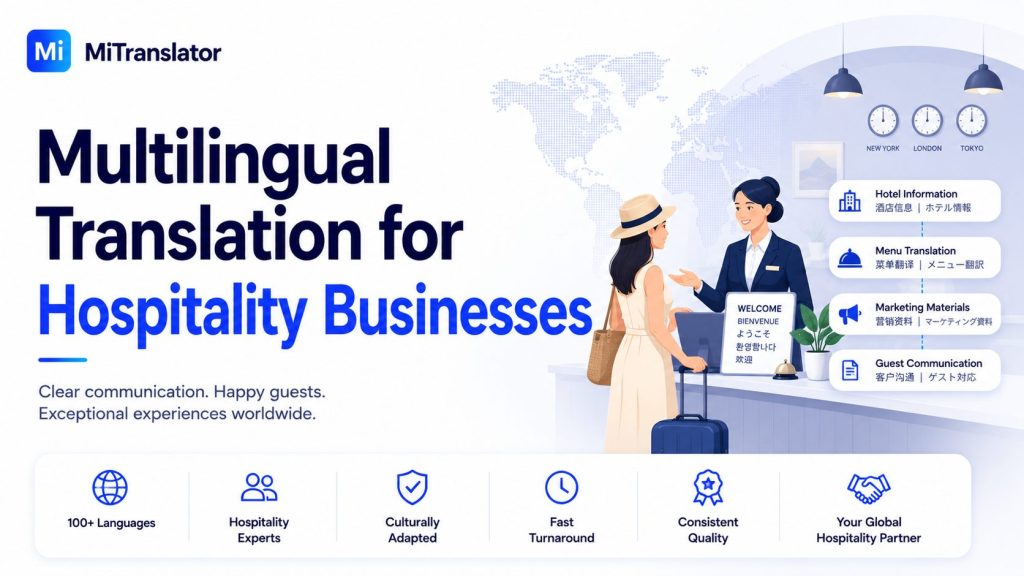

The hospitality industry serves guests from diverse linguistic and cultural backgrounds every day. Whether operating a luxury hotel, resort, restaurant chain, serviced apartment, or tourism-related business, hospitality providers must communicate effectively with international customers to deliver exceptional guest experiences.
Today’s travelers expect to access information in their preferred language when researching accommodations, making reservations, reviewing amenities, ordering services, or seeking customer support. Language barriers can create confusion, reduce guest satisfaction, and negatively impact online reviews. As global tourism continues to grow, multilingual translation has become an essential investment for hospitality businesses seeking to attract international guests and strengthen their competitive advantage.
This article explores the importance of multilingual translation for hospitality businesses, common challenges organizations face, best practices for effective localization, and how professional language services can support business growth in international markets.
What Is Multilingual Translation for Hospitality Businesses?
Multilingual translation for hospitality businesses involves adapting customer-facing and operational content into multiple languages to support international guests and improve communication across diverse markets.
Hospitality organizations generate a wide range of content that may require translation, including:
- Hotel websites
- Online booking platforms
- Room descriptions
- Restaurant menus
- Guest information guides
- Promotional materials
- Customer service communications
- Mobile applications
- Loyalty program content
- Event and conference materials
- Safety instructions
- Employee training documents
The goal of hospitality translation is not simply to convert text from one language into another. Effective translation ensures that guests receive clear, accurate, and culturally appropriate information throughout their journey.
Localization is often a key component of the process. It adapts content to match local language preferences, cultural expectations, measurement systems, currencies, and communication styles. This helps create a seamless experience for guests regardless of where they come from.
For hospitality businesses, multilingual communication directly contributes to guest satisfaction, brand reputation, and revenue generation.
Why Multilingual Translation Matters for Hospitality Businesses
Attracts International Guests
Most travelers prefer to browse accommodations and travel information in their native language. A multilingual website and booking experience can significantly increase engagement and conversion rates among international visitors.
When guests can easily understand room options, amenities, pricing, and policies, they are more likely to complete a reservation.
Enhances Guest Experience
Guest satisfaction depends heavily on clear communication. From pre-arrival information to in-house services, multilingual content helps guests feel comfortable and confident throughout their stay.
Providing information in multiple languages demonstrates a commitment to customer service and inclusivity.
Improves Online Reputation
Misunderstandings caused by language barriers can lead to negative reviews and customer complaints. Accurate translations help guests understand what to expect, reducing the likelihood of dissatisfaction.
Positive guest experiences often translate into better online ratings and stronger brand credibility.
Increases Direct Bookings
Many hospitality businesses invest heavily in attracting international visitors. Multilingual websites and booking systems can reduce reliance on third-party booking platforms and encourage direct reservations.
This can improve profit margins and strengthen customer relationships.
Supports International Marketing
Hotels, resorts, and hospitality brands often market their services globally. Multilingual marketing materials allow businesses to communicate effectively with potential guests across different regions.
Localized campaigns can improve engagement and maximize marketing return on investment.
Strengthens Operational Efficiency
Translation is not only important for guests. Hospitality businesses also use multilingual content for staff training, operational procedures, and workplace communication.
Clear internal communication supports service quality and operational consistency.
Common Challenges in Hospitality Translation
Literal Translation of Marketing Content
Hospitality marketing often focuses on emotions, experiences, and destination appeal. Direct translations can sound awkward and fail to inspire potential guests.
Localization helps preserve the intended tone and persuasive impact.
Inconsistent Terminology
Hotels and hospitality brands frequently use specific terminology for room categories, amenities, dining options, and services.
Without standardized translations, inconsistencies can confuse guests and create booking challenges.
Cultural Differences
Different markets may respond differently to marketing messages, visual content, and promotional offers.
A message that resonates with travelers from one country may not appeal to guests from another region.
Frequent Content Updates
Hospitality content changes regularly due to:
- Seasonal promotions
- Room availability
- Restaurant menus
- Event schedules
- Pricing adjustments
Keeping multiple language versions updated can be a significant challenge.
Complex Booking Information
Reservation systems often contain critical information regarding:
- Cancellation policies
- Payment conditions
- Taxes and fees
- Check-in requirements
- Guest policies
Translation errors in these areas can result in disputes and customer dissatisfaction.
Managing Multiple Channels
Hospitality businesses must maintain consistent communication across websites, booking platforms, mobile apps, email campaigns, and social media channels.
Ensuring consistency across all languages and platforms requires careful coordination.
Best Practices for Multilingual Hospitality Translation
Prioritize Guest-Facing Content
Focus first on materials that directly influence booking decisions and guest experiences, including:
- Websites
- Booking engines
- Room descriptions
- Menus
- Guest information guides
These resources often have the greatest impact on customer satisfaction.
Invest in Localization
Localization adapts content to local audiences by considering:
- Cultural preferences
- Currency formats
- Date and time conventions
- Measurement units
- Regional language variations
Localized content feels more natural and trustworthy to international guests.
Create Hospitality Terminology Guidelines
Develop multilingual glossaries covering:
- Room types
- Hotel amenities
- Dining terminology
- Loyalty programs
- Customer service language
Consistent terminology improves professionalism and clarity.
Work With Hospitality Translation Specialists
Hospitality content combines marketing, customer service, and operational communication. Experienced hospitality translators understand how to balance these requirements effectively.
Optimize for Multilingual SEO
International travelers often search for accommodations using their native language.
Multilingual SEO should include:
- Localized keywords
- Destination-specific search terms
- Translated metadata
- Regional content optimization
SEO localization helps increase visibility in international search results.
Establish Quality Assurance Procedures
All translated content should undergo review to ensure:
- Accuracy
- Consistency
- Cultural appropriateness
- Brand alignment
Quality control helps maintain a professional image across all markets.
Hospitality Translation Checklist
Before publishing multilingual content, verify that:
- Guest-facing information is accurate.
- Room descriptions are consistent.
- Booking policies are clearly translated.
- Marketing messages are localized.
- Currency and measurement formats are correct.
- SEO elements are optimized.
- Quality assurance reviews have been completed.
How MITRANS Can Help
Hospitality businesses need professional translation services that go beyond language conversion. Successful communication requires cultural understanding, marketing expertise, and industry-specific knowledge.
MITRANS provides specialized translation and localization services for hotels, resorts, restaurants, serviced apartments, travel companies, and hospitality brands.
Our services include:
- Hotel website translation
- Booking platform localization
- Restaurant menu translation
- Guest guide translation
- Hospitality marketing translation
- Multilingual SEO localization
- Mobile app translation
- Customer support content translation
- Employee training material translation
- Hospitality document review and quality assurance
Our experienced linguists understand the unique communication needs of the hospitality industry and help businesses deliver consistent, engaging experiences for international guests.
With expertise in English, Vietnamese, Chinese, Japanese, Korean, French, German, and many other languages, MITRANS helps hospitality businesses attract more guests, improve customer satisfaction, and expand into global markets.
Frequently Asked Questions About Hospitality Translation
Why is multilingual translation important for hospitality businesses?
Multilingual translation helps hospitality businesses communicate effectively with international guests, improve customer experiences, increase bookings, and strengthen brand reputation.
Which hospitality materials should be translated?
Common examples include hotel websites, booking platforms, room descriptions, menus, guest information guides, marketing materials, and customer support content.
What is hospitality localization?
Hospitality localization involves adapting content to match the cultural preferences, language expectations, and travel habits of specific target markets.
Can multilingual websites increase hotel bookings?
Yes. Travelers are more likely to trust and book accommodations when information is available in their native language.
Why should hospitality businesses use professional translators?
Professional translators ensure that hospitality content is accurate, culturally appropriate, engaging, and aligned with brand standards.
Need Hospitality Translation and Localization Support?
Looking to attract more international guests and deliver exceptional multilingual experiences across every stage of the customer journey?
Contact MITRANS today for fast, accurate, and professional hospitality translation and localization services for hotels, resorts, restaurants, and hospitality businesses worldwide.