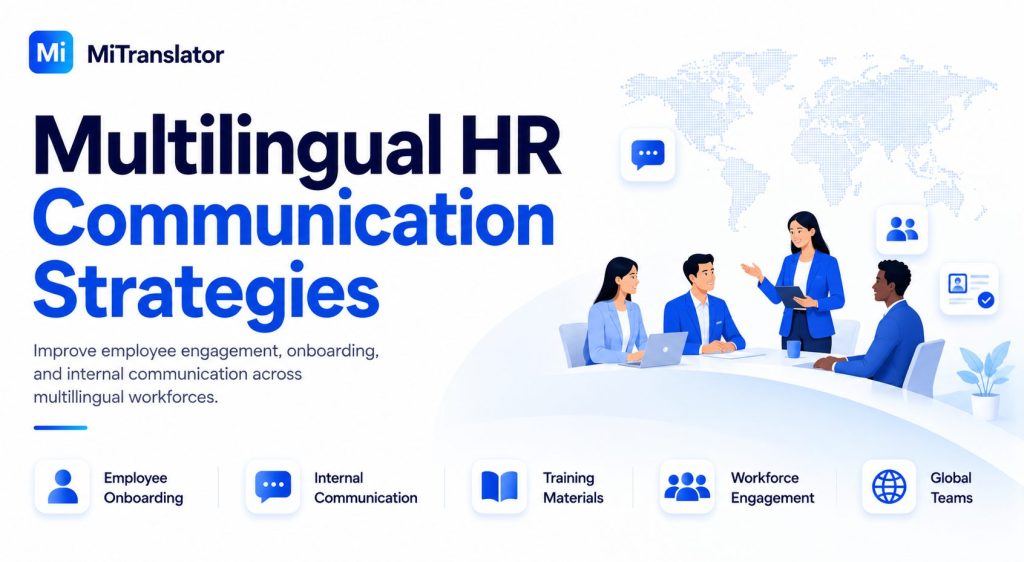
Businesses today operate in increasingly diverse environments, with employees, contractors, and stakeholders often speaking different languages and coming from different cultural backgrounds. As organizations expand internationally or build multilingual workforces, Human Resources (HR) teams face the challenge of ensuring that critical information is communicated clearly and consistently to everyone.
Poor communication can lead to misunderstandings, compliance issues, reduced employee engagement, and even workplace safety risks. From onboarding materials and employee handbooks to benefits information and internal announcements, organizations must ensure that all employees can access and understand important HR content.
Implementing effective multilingual HR communication strategies helps businesses create inclusive workplaces, improve operational efficiency, and support global growth. This article explores what multilingual HR communication means, why it matters, common challenges organizations face, and best practices for success.
What Are Multilingual HR Communication Strategies?
Multilingual HR communication strategies are structured approaches that organizations use to communicate HR-related information in multiple languages. These strategies ensure that employees can understand company policies, workplace expectations, training materials, and other essential information regardless of their primary language.
HR communication encompasses a broad range of documents and interactions, including:
- Employee onboarding materials
- Employment contracts
- Employee handbooks
- Workplace policies
- Benefits documentation
- Training resources
- Internal communications
- Performance management materials
- Health and safety guidelines
A successful multilingual strategy goes beyond direct translation. It also involves localization, which adapts content to reflect cultural norms, legal requirements, and communication preferences in different regions.
For example, an employee handbook designed for a workforce in North America may require significant adaptation before being distributed to employees in Vietnam, Japan, or Europe. Local labor laws, workplace expectations, and communication styles can all influence how information should be presented.
By combining accurate translation with cultural adaptation, businesses can ensure that employees receive consistent and meaningful communication across all locations.
Why Multilingual HR Communication Matters for Businesses
Strengthens Employee Engagement
Employees are more likely to engage with company initiatives when information is presented in a language they understand. Clear communication helps employees feel valued, included, and connected to the organization.
Improves Compliance
Many countries require employers to provide employment-related information in a language employees can reasonably understand. Multilingual communication helps organizations meet regulatory requirements and reduce legal risks.
Enhances Workplace Safety
In sectors such as manufacturing, construction, logistics, and healthcare, safety instructions must be communicated clearly to all workers. Language barriers can increase the risk of accidents and workplace incidents.
Supports Global Expansion
As businesses enter new markets, effective communication becomes essential for managing international teams. Multilingual HR communication helps ensure consistency across global operations while respecting local requirements.
Increases Productivity
Misunderstandings can slow workflows, create confusion, and increase administrative burdens. Clear communication reduces errors and helps employees perform their responsibilities more efficiently.
Improves Talent Retention
Employees who understand company policies, benefits, and expectations are more likely to remain engaged and committed to the organization. Inclusive communication contributes to a positive employee experience and stronger retention rates.
Common Challenges in Multilingual HR Communication
Inconsistent Terminology
Organizations often use multiple translators, departments, or communication channels. Without standardized terminology, employees may receive conflicting information across different documents.
Cultural Differences
Certain expressions, examples, or communication styles may not translate effectively across cultures. Direct translations can sometimes create confusion or unintended interpretations.
Managing Multiple Languages
As organizations grow, maintaining communication across numerous languages becomes increasingly complex. HR teams must ensure that updates are distributed accurately and consistently across all language versions.
Outdated Content
HR policies and regulatory requirements frequently change. Keeping translated documents updated can be challenging, particularly for organizations operating across multiple countries.
Limited Internal Resources
Many HR teams lack dedicated language professionals. As a result, organizations may rely on machine translation or bilingual employees, which can lead to inaccuracies and inconsistencies.
Technology Limitations
Some HR systems and employee platforms may not fully support multilingual content, making it more difficult to deliver a seamless employee experience.
Best Practices for Effective Multilingual HR Communication
Organizations can improve communication outcomes by adopting a proactive and structured approach.
Assess Language Requirements
Identify the primary languages spoken within the workforce and determine which documents and communications require translation.
Create a Language Policy
Develop clear guidelines regarding:
- Languages supported by the organization
- Documents that require translation
- Review and approval procedures
- Quality assurance standards
Standardize Terminology
Create multilingual glossaries for HR, legal, and company-specific terms to maintain consistency across all communications.
Prioritize Critical Documents
Focus first on high-impact materials such as:
- Employment contracts
- Employee handbooks
- Workplace policies
- Safety procedures
- Compliance documentation
Invest in Localization
Adapt content to local cultural expectations and legal requirements instead of relying solely on direct translation.
Use Professional Language Services
Professional translators with HR expertise can ensure that communications are accurate, culturally appropriate, and compliant with local regulations.
Establish Review Processes
Implement quality assurance procedures to verify accuracy, consistency, and readability before distributing multilingual content.
Gather Employee Feedback
Regularly seek feedback from employees to identify communication gaps and improve future HR initiatives.
Multilingual HR Communication Checklist
Before publishing HR content, verify that:
- Critical documents have been translated.
- Terminology is consistent.
- Cultural adaptation has been completed.
- Compliance requirements have been reviewed.
- All language versions are current.
- Employees have access to multilingual support.
- Quality assurance checks have been performed.
How MITRANS Can Help
Successful multilingual HR communication requires more than basic translation. Organizations need accurate, culturally appropriate, and legally compliant content that supports employees across different regions and languages.
MITRANS provides professional translation and localization services tailored to HR and corporate communication needs. Our experienced linguists understand the complexities of employment-related content and help organizations communicate effectively with diverse workforces.
Our HR language solutions include:
- Employee handbook translation
- Employment contract translation
- HR policy translation
- Benefits documentation translation
- Training material localization
- Internal communication translation
- Workplace safety document translation
- Compliance document translation
- Multilingual content review and quality assurance
With expertise in English, Vietnamese, Chinese, Japanese, Korean, and many other languages, MITRANS helps businesses improve communication, reduce risks, and support employee engagement across global operations.
Frequently Asked Questions About Multilingual HR Communication
What is multilingual HR communication?
Multilingual HR communication refers to the practice of providing HR-related information in multiple languages to ensure employees can understand important workplace content.
Why is multilingual communication important for global companies?
It helps organizations improve employee engagement, maintain compliance, enhance workplace safety, and support effective workforce management across different regions.
Which HR documents should be translated?
Common examples include employment contracts, employee handbooks, workplace policies, onboarding materials, benefits information, and training resources.
Is machine translation suitable for HR content?
Machine translation can assist with basic communication, but professional human translation is recommended for HR documents because accuracy and compliance are critical.
How can organizations maintain consistency across multiple languages?
Businesses can use terminology databases, translation memories, style guides, and professional language service providers to ensure consistency.
Need Multilingual HR Translation Support?
Looking to improve communication with international employees and multilingual teams while maintaining compliance and employee engagement?
Contact MITRANS today for fast, accurate, and professional HR translation and localization services, including employee handbooks, employment contracts, training materials, workplace policies, and internal communications tailored to your organization’s needs.