
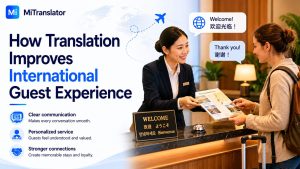
The hospitality industry is built on communication. Every interaction between a guest and a hospitality business—whether through a website, booking platform, hotel reception, restaurant menu, mobile app, or customer support channel—shapes the overall guest experience. As international travel continues to grow, hospitality businesses are serving guests from increasingly diverse linguistic and cultural backgrounds.
For many travelers, language barriers can create frustration, confusion, and uncertainty throughout their journey. Difficulty understanding booking information, hotel policies, dining options, or local services can negatively affect customer satisfaction. This is why professional translation has become a critical component of guest experience management for hotels, resorts, restaurants, travel agencies, and tourism organizations.
This article explores how translation improves the international guest experience, the challenges businesses face when communicating with global travelers, and the best practices hospitality brands can implement to deliver exceptional multilingual experiences.
What Does Translation Mean in the Guest Experience?
Translation in the hospitality industry refers to adapting customer-facing content into multiple languages to help international guests access information, make informed decisions, and enjoy a seamless travel experience.
Hospitality businesses often translate:
- Hotel websites
- Booking platforms
- Room descriptions
- Restaurant menus
- Guest guides
- Mobile applications
- Customer support materials
- Email communications
- Promotional campaigns
- Safety instructions
- Tourism information
However, successful hospitality translation goes beyond converting words from one language to another. It involves localization, ensuring that content feels natural, culturally appropriate, and relevant to the target audience.
For example, international guests may have different expectations regarding booking processes, customer service communication, dietary information, or travel planning. Properly localized content helps businesses meet these expectations while maintaining a consistent brand experience.
When translation is handled professionally, guests can interact confidently with a business throughout every stage of their journey.
Why Translation Matters for International Guest Experience
Creates a Positive First Impression
The guest experience often begins long before arrival. Travelers typically research accommodations, attractions, and services online before making booking decisions.
When websites and booking platforms are available in a guest’s preferred language, they immediately feel more comfortable and confident interacting with the brand.
A positive first impression can significantly influence purchasing decisions.
Reduces Communication Barriers
Language barriers can create misunderstandings regarding:
- Room features
- Hotel amenities
- Tour schedules
- Transportation arrangements
- Dining options
- Reservation policies
Professional translation helps eliminate confusion and ensures guests receive accurate information throughout their stay.
Increases Guest Confidence
Traveling to unfamiliar destinations can be stressful. Guests often seek reassurance that they understand what they are booking and what to expect upon arrival.
Multilingual communication helps travelers feel more secure when making reservations, requesting services, or asking questions.
Improves Customer Satisfaction
Guests who clearly understand information are more likely to enjoy their overall experience.
Accurate translation contributes to:
- Smoother check-in processes
- Better dining experiences
- Easier navigation of services
- Faster issue resolution
These factors directly influence guest satisfaction and loyalty.
Supports Inclusive Hospitality
Hospitality businesses serve people from diverse countries, cultures, and backgrounds.
Providing multilingual information demonstrates respect for international guests and helps create a welcoming environment for everyone.
Encourages Positive Reviews
Satisfied guests are more likely to leave favorable online reviews and recommend businesses to others.
Clear communication reduces misunderstandings that often lead to complaints or negative feedback.
Common Challenges in Communicating With International Guests
Language Differences
The most obvious challenge is communicating effectively with guests who do not speak the local language.
Without translation, guests may struggle to understand essential information, reducing their overall satisfaction.
Cultural Expectations
Different cultures have different expectations regarding customer service, hospitality standards, and communication styles.
Messages that work well for one audience may not resonate with another.
Inconsistent Information
Hospitality businesses often publish content across multiple channels, including:
- Websites
- Booking platforms
- Social media
- Mobile apps
- Printed materials
Inconsistent translations can create confusion and reduce trust.
Menu and Food Communication
Restaurant menus often contain local ingredients, cooking methods, and cultural references that may be unfamiliar to international guests.
Poor translations can lead to misunderstandings about dishes, allergens, or dietary options.
Safety and Emergency Information
Hotels and tourism businesses must communicate safety instructions clearly.
Translation errors in emergency procedures or health-related information can create significant risks for guests.
Maintaining Updated Content
Hospitality businesses frequently update promotions, services, pricing, and policies.
Keeping multilingual content accurate and current requires ongoing management.
Best Practices for Improving International Guest Experience Through Translation
Translate the Entire Guest Journey
Translation should support every stage of the customer experience, including:
- Research and discovery
- Booking and payment
- Pre-arrival communication
- On-site guest services
- Post-stay follow-up
Consistent multilingual support creates a smoother experience from start to finish.
Prioritize Guest-Facing Content
Focus first on materials that directly influence guest decisions and satisfaction, such as:
- Websites
- Booking pages
- Menus
- Guest guides
- Customer support resources
These touchpoints have the greatest impact on the overall experience.
Invest in Localization
Localization adapts content to local expectations and cultural preferences.
This may include:
- Currency formats
- Date and time formats
- Measurement units
- Communication styles
- Cultural references
Localized content feels more natural and user-friendly.
Maintain Consistent Terminology
Create multilingual glossaries covering:
- Room categories
- Hotel services
- Dining terminology
- Tourism activities
- Customer support language
Consistency improves clarity and professionalism.
Use Professional Hospitality Translators
Hospitality content requires a combination of linguistic accuracy, cultural understanding, and customer-focused communication.
Experienced translators can ensure that content remains engaging while accurately conveying important information.
Review and Update Content Regularly
Establish quality assurance processes to ensure that all translated content remains accurate, relevant, and aligned with current services and policies.
Guest Experience Translation Checklist
Before publishing multilingual hospitality content, verify that:
- Information is accurate and easy to understand.
- Cultural adaptations have been completed.
- Customer-facing terminology is consistent.
- Safety information is clearly translated.
- Menus and service descriptions are localized.
- Booking policies are understandable.
- Quality assurance reviews have been completed.
How MITRANS Can Help
Providing exceptional experiences for international guests requires more than basic translation. Hospitality businesses need accurate, culturally appropriate, and customer-focused communication across every guest touchpoint.
MITRANS provides professional translation and localization services for hotels, resorts, restaurants, tourism organizations, travel agencies, and hospitality brands.
Our services include:
- Hospitality website translation
- Booking platform localization
- Restaurant menu translation
- Guest guide translation
- Tourism content translation
- Customer support translation
- Mobile app localization
- Multilingual marketing translation
- Hospitality document translation
- Linguistic review and quality assurance
Our experienced linguists understand the hospitality industry’s unique communication requirements and help businesses create seamless multilingual experiences for international guests.
With expertise in English, Vietnamese, Chinese, Japanese, Korean, French, German, and many other languages, MITRANS helps hospitality businesses improve customer satisfaction, strengthen brand reputation, and attract travelers from around the world.
Frequently Asked Questions About Hospitality Translation
Why is translation important for international guest experience?
Translation helps guests understand important information, reduces communication barriers, improves satisfaction, and creates a more comfortable travel experience.
Which hospitality materials should be translated?
Common materials include websites, booking platforms, menus, guest guides, customer support content, promotional materials, and safety information.
What is the difference between translation and localization?
Translation converts content into another language, while localization adapts content to cultural preferences, communication styles, and local market expectations.
Can translation improve guest satisfaction?
Yes. Guests who clearly understand services, policies, and amenities are more likely to have positive experiences and leave favorable reviews.
Why should hospitality businesses use professional translation services?
Professional translation ensures accuracy, consistency, cultural appropriateness, and a higher-quality guest experience across all customer touchpoints.
Need Hospitality Translation Support?
Looking to improve communication with international guests and deliver exceptional multilingual experiences across every stage of the customer journey?
Contact MITRANS today for fast, accurate, and professional hospitality translation and localization services tailored to hotels, resorts, restaurants, tourism businesses, and travel brands worldwide.