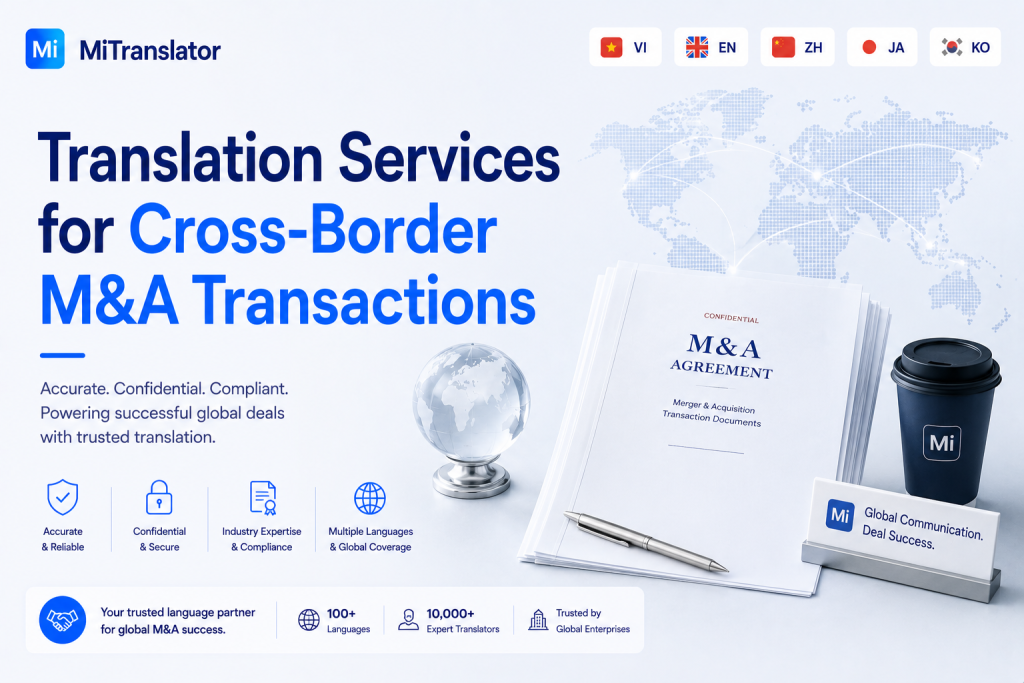
Cross-border mergers and acquisitions (M&A) have become a key growth strategy for companies seeking market expansion, technology acquisition, operational synergies, and access to new customer bases. As businesses increasingly pursue international transactions, the complexity of managing multilingual documentation has grown significantly.
A cross-border M&A transaction typically involves extensive communication among buyers, sellers, investors, legal advisors, financial institutions, regulators, auditors, and consultants located in different countries. These stakeholders often operate in different languages and legal systems, making accurate translation essential throughout the transaction lifecycle.
Professional translation services help ensure that all parties have a clear understanding of transaction terms, corporate structures, financial performance, regulatory obligations, and legal risks. Accurate translation supports informed decision-making, regulatory compliance, and successful deal execution.
What Are Cross-Border M&A Transactions?
A cross-border merger or acquisition occurs when a company acquires, merges with, or invests in a business located in another country.
These transactions may involve:
- Foreign acquisitions
- International mergers
- Strategic investments
- Joint acquisitions
- Private equity investments
- Venture capital transactions
- Corporate restructuring
- Asset acquisitions
Because multiple jurisdictions are involved, cross-border M&A transactions often generate large volumes of multilingual documentation that require professional translation.
Why Translation Is Critical in Cross-Border M&A
Supporting Due Diligence
Due diligence is one of the most document-intensive phases of an M&A transaction.
Potential investors and acquirers must review extensive corporate, legal, financial, operational, and regulatory records before making investment decisions.
Professional translation enables buyers and advisors to evaluate these documents accurately.
Facilitating Negotiations
Negotiations often involve parties from different linguistic and cultural backgrounds.
Translation helps ensure that transaction terms, commercial objectives, and strategic expectations are clearly understood.
Supporting Regulatory Compliance
Cross-border transactions frequently require approvals from government agencies, competition authorities, securities regulators, and investment review boards.
Accurate translation helps organizations meet submission requirements and avoid regulatory delays.
Reducing Legal Risks
M&A agreements contain legally binding obligations that can significantly affect transaction outcomes.
Translation errors may create misunderstandings regarding warranties, indemnities, liabilities, and post-closing obligations.
Improving Stakeholder Communication
Effective communication among investors, management teams, advisors, and regulators is essential throughout the transaction process.
Professional translation helps maintain clarity and consistency.
Common Documents Requiring Translation During M&A Transactions
Corporate Documents
Corporate records often reviewed during due diligence include:
- Certificates of incorporation
- Company charters
- Articles of Association
- Shareholder registers
- Corporate governance documents
- Board resolutions
- Shareholder resolutions
Financial Documents
Financial information is critical during transaction evaluation.
Common documents include:
- Audited financial statements
- Management accounts
- Tax filings
- Audit reports
- Financial forecasts
- Debt agreements
- Banking documentation
Legal Agreements
Legal documentation may include:
- Commercial contracts
- Supplier agreements
- Customer agreements
- Employment contracts
- Lease agreements
- Licensing agreements
- Joint venture agreements
Regulatory Documents
Businesses often need translation of:
- Licenses
- Permits
- Regulatory filings
- Compliance reports
- Government correspondence
Human Resources Documents
Employment-related records commonly reviewed include:
- Employee handbooks
- Compensation policies
- Labor agreements
- Organizational charts
- Executive employment contracts
Intellectual Property Documents
Many transactions involve review of:
- Patents
- Trademarks
- Copyright registrations
- Technology licenses
- Confidentiality agreements
Translation Requirements During Different M&A Stages
Stage 1: Preliminary Evaluation
During the early stages of a transaction, investors often require translation of key corporate and financial information to assess feasibility.
Documents commonly translated include:
- Executive summaries
- Company profiles
- Financial highlights
- Business plans
- Strategic presentations
Stage 2: Due Diligence
This stage typically generates the highest volume of translation work.
Buyers and advisors review extensive documentation relating to:
- Legal compliance
- Financial performance
- Tax matters
- Operations
- Employment issues
- Intellectual property
Stage 3: Negotiation and Transaction Structuring
As negotiations progress, translation may be required for:
- Letters of intent
- Term sheets
- Confidentiality agreements
- Transaction proposals
- Negotiation materials
Stage 4: Transaction Documentation
Final transaction documents often require highly specialized legal translation.
Examples include:
- Share purchase agreements
- Asset purchase agreements
- Merger agreements
- Disclosure schedules
- Escrow agreements
- Financing documents
Stage 5: Post-Closing Integration
Following completion of the transaction, organizations often require translation support for:
- Employee communications
- Corporate policies
- Integration plans
- Operational procedures
- Compliance documentation
Common Challenges in M&A Translation
Large Document Volumes
Cross-border transactions may involve thousands of pages of documentation across multiple workstreams.
Tight Transaction Timelines
M&A transactions frequently operate under strict deadlines that require rapid document review and translation.
Specialized Terminology
M&A documents contain complex terminology relating to:
- Corporate law
- Securities law
- Accounting
- Taxation
- Finance
- Employment law
- Regulatory compliance
Multiple Jurisdictions
Legal and regulatory concepts often differ significantly between countries.
Translators must understand the relevant legal and business context.
Confidentiality Requirements
M&A transactions involve highly sensitive information regarding:
- Financial performance
- Strategic plans
- Ownership structures
- Competitive positioning
Strict confidentiality measures are essential.
Risks of Poor Translation in M&A Transactions
Translation errors can create significant transaction risks.
Potential consequences include:
- Misinterpretation of contractual obligations
- Regulatory compliance issues
- Due diligence inaccuracies
- Delayed transaction approvals
- Increased legal expenses
- Investment risks
- Post-closing disputes
- Failed transactions
Because M&A transactions often involve substantial financial commitments, translation accuracy is critical.
Best Practices for M&A Document Translation
Use Specialized Legal and Financial Translators
M&A documentation requires expertise in corporate law, finance, accounting, and regulatory terminology.
Prioritize Critical Documents
Organizations should identify high-priority documents requiring immediate translation during due diligence and negotiations.
Establish Terminology Consistency
Consistent translation of transaction-specific terminology helps avoid confusion throughout the deal process.
Implement Multi-Level Quality Assurance
A robust review process should include:
- Translation
- Editing
- Proofreading
- Terminology review
- Legal quality checks
Maintain Strict Confidentiality
Secure file handling procedures, restricted access controls, and confidentiality agreements are essential.
Industries Frequently Involved in Cross-Border M&A
Translation services are commonly required in M&A transactions involving:
Manufacturing
Global manufacturers frequently acquire suppliers, distributors, and production facilities across different regions.
Technology
Technology acquisitions often involve complex intellectual property and software-related documentation.
Healthcare
Healthcare transactions require extensive regulatory, clinical, and compliance documentation.
Financial Services
Banks, insurers, and investment firms regularly engage in cross-border acquisitions and strategic investments.
Energy and Infrastructure
Large-scale infrastructure and energy projects often involve multinational investors and regulatory approvals.
Consumer Goods and Retail
Global brands frequently expand through acquisitions in emerging and developed markets.
How MITRANS Supports Cross-Border M&A Transactions
MITRANS provides professional translation services for mergers, acquisitions, investments, and corporate transactions.
Our services include translation of:
- Due diligence documentation
- Corporate records
- Financial statements
- Tax documents
- Commercial contracts
- Share purchase agreements
- Regulatory filings
- Employment documentation
- Intellectual property records
- Corporate governance materials
MITRANS combines experienced legal, financial, and corporate translators with rigorous quality assurance procedures to support complex cross-border transactions.
We support major language pairs including:
- English ↔ Vietnamese
- Chinese ↔ Vietnamese
- Japanese ↔ Vietnamese
- Korean ↔ Vietnamese
- English ↔ Chinese
- English ↔ Japanese
- English ↔ Korean
Our team understands the confidentiality, accuracy, and time-sensitive requirements associated with international M&A projects.
Frequently Asked Questions
Why is translation important in cross-border M&A transactions?
Translation helps investors, legal advisors, regulators, and management teams understand critical transaction documents and make informed decisions.
Which documents are most commonly translated during due diligence?
Corporate records, financial statements, contracts, tax documents, employment records, and regulatory filings are among the most frequently translated materials.
Can translation errors affect transaction outcomes?
Yes. Misinterpretation of legal obligations, financial information, or regulatory requirements can create significant risks and delays.
How can companies maintain confidentiality during translation?
Working with professional translation providers that implement secure document management procedures and confidentiality agreements helps protect sensitive information.
What expertise should M&A translators have?
Translators should possess knowledge of corporate law, finance, accounting, regulatory compliance, and transaction terminology relevant to mergers and acquisitions.
Contact MITRANS for Professional Translation Services
Professional translation plays a critical role in ensuring accuracy, compliance, and effective communication across international business activities. Whether you require translation for legal, financial, technical, corporate, immigration, or regulatory documents, MITRANS is ready to help.
Contact MITRANS today for fast, accurate, and professional translation services tailored to your business and documentation requirements.