
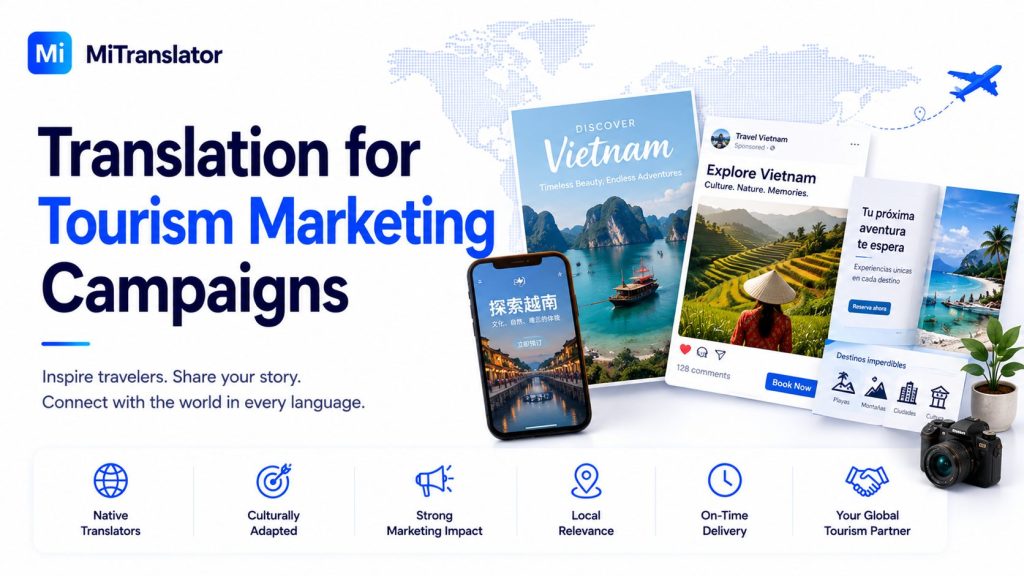
Tourism marketing is all about inspiring people to explore new destinations, experience different cultures, and create unforgettable memories. In an increasingly global travel market, tourism organizations, travel agencies, hotels, resorts, airlines, and destination management companies must communicate effectively with audiences from diverse linguistic and cultural backgrounds.
A successful tourism marketing campaign can attract visitors, increase bookings, and strengthen destination branding. However, even the most creative campaign can fail if its message is not accurately translated and localized for international audiences. Literal translations often lose emotional impact, cultural relevance, and marketing effectiveness.
Professional translation for tourism marketing campaigns helps organizations connect with global travelers, build trust, and maximize the return on their marketing investments. This article explores the importance of tourism marketing translation, common challenges businesses face, best practices for successful localization, and how professional language services can support international tourism growth.
What Is Translation for Tourism Marketing Campaigns?
Translation for tourism marketing campaigns involves adapting promotional content from one language into another while preserving the campaign’s message, emotional appeal, and branding objectives.
Tourism marketing materials often include:
- Destination advertisements
- Travel brochures
- Tourism websites
- Social media campaigns
- Digital advertising content
- Video subtitles
- Email marketing campaigns
- Tourism guides
- Promotional landing pages
- Influencer marketing content
- Event promotion materials
- Mobile app content
Unlike technical translation, tourism marketing translation focuses heavily on persuasion and engagement. The goal is not simply to communicate information but to inspire travelers to take action.
Localization plays a critical role in this process. It adapts content to suit the cultural expectations, language preferences, and travel behaviors of specific audiences.
For example, a campaign promoting luxury beach resorts may require different messaging for travelers from Japan, Germany, South Korea, or the United States. Localization helps ensure that marketing content resonates with each target market.
Why Translation Matters for Tourism Marketing Campaigns
Expands Global Reach
Tourism businesses depend on international visitors. Translating marketing campaigns allows organizations to reach potential travelers in multiple countries and languages.
A broader audience creates more opportunities for bookings, inquiries, and destination awareness.
Increases Campaign Effectiveness
Consumers are more likely to engage with marketing messages presented in their native language.
Localized content improves:
- Click-through rates
- Website engagement
- Lead generation
- Booking conversions
This helps maximize marketing performance.
Strengthens Destination Branding
Tourism marketing often aims to create a strong emotional connection with travelers.
Professional translation ensures that branding messages remain consistent across markets while adapting to local cultural expectations.
Builds Trust With Travelers
Travelers are more likely to trust tourism providers that communicate clearly and professionally in their language.
Accurate translation enhances credibility and improves customer confidence.
Supports Multichannel Marketing
Tourism campaigns typically run across multiple platforms, including websites, social media, search engines, email campaigns, and video content.
Translation ensures consistency across all channels and touchpoints.
Improves International SEO Performance
Localized content helps tourism organizations appear in search results across different languages and markets.
This increases visibility and attracts more organic traffic from international travelers.
Common Challenges in Tourism Marketing Translation
Translating Emotion and Storytelling
Tourism marketing relies heavily on emotions, experiences, and storytelling.
Literal translations often fail to capture the excitement, inspiration, or sense of adventure that marketing campaigns aim to create.
Cultural Differences
Different audiences may respond differently to marketing messages, imagery, and promotional offers.
A campaign that performs well in one country may require significant adaptation to resonate in another.
Localizing Slogans and Taglines
Tourism slogans are often difficult to translate directly.
A literal translation may lose its impact or fail to communicate the intended message. Creative transcreation is often required to preserve the campaign’s effectiveness.
Inconsistent Brand Messaging
Tourism organizations frequently run campaigns across multiple languages simultaneously.
Without proper terminology management and review processes, brand messaging can become inconsistent across markets.
Frequent Campaign Updates
Marketing campaigns evolve quickly and often involve:
- Seasonal promotions
- Event announcements
- Limited-time offers
- New destination launches
Maintaining consistency across multiple language versions can be challenging.
Multilingual Digital Content
Modern tourism campaigns often include websites, social media content, videos, and mobile applications.
Ensuring consistency across these channels requires careful planning and coordination.
Best Practices for Tourism Marketing Campaign Translation
Focus on Localization Rather Than Direct Translation
Marketing content should be adapted for local audiences instead of translated word-for-word.
Localization helps ensure that content feels natural, relevant, and persuasive.
Use Native Marketing Translators
Tourism marketing requires translators who understand both language and consumer behavior.
Native-language marketing specialists can create content that resonates with target audiences.
Consider Cultural Preferences
Adapt content to reflect:
- Travel motivations
- Cultural values
- Communication styles
- Purchasing behaviors
This helps improve engagement and campaign performance.
Maintain Consistent Brand Voice
Whether promoting adventure tourism, luxury travel, cultural experiences, or family vacations, brand identity should remain consistent across all languages.
Developing multilingual style guides can help maintain consistency.
Optimize for Multilingual SEO
Localized tourism campaigns should include:
- Market-specific keyword research
- Localized page titles
- Meta descriptions
- Destination-focused content
SEO localization improves visibility in international search engines.
Review Visual and Cultural Elements
Images, colors, symbols, and cultural references should be evaluated to ensure they align with local audience expectations.
Tourism Marketing Translation Checklist
Before launching a multilingual campaign, verify that:
- Marketing messages are culturally appropriate.
- Emotional appeal is preserved.
- Brand voice remains consistent.
- SEO content is localized.
- Slogans and taglines have been adapted effectively.
- Visual elements are suitable for target markets.
- Quality assurance reviews have been completed.
How MITRANS Can Help
Successful tourism marketing campaigns require more than accurate translation. They require localization, creativity, cultural insight, and marketing expertise.
MITRANS provides professional translation and localization services for tourism organizations, travel agencies, hospitality brands, destination management companies, and tourism boards.
Our services include:
- Tourism marketing translation
- Destination promotion localization
- Travel website translation
- Social media campaign localization
- Multilingual SEO content translation
- Travel brochure translation
- Video subtitle translation
- Email marketing translation
- Tourism app localization
- Marketing content review and quality assurance
Our experienced linguists understand the unique requirements of tourism marketing and help businesses communicate effectively with international audiences.
With expertise in English, Vietnamese, Chinese, Japanese, Korean, French, German, and many other languages, MITRANS helps tourism brands increase visibility, improve engagement, and attract travelers from around the world.
Frequently Asked Questions About Tourism Marketing Translation
Why is translation important for tourism marketing campaigns?
Translation helps tourism businesses communicate effectively with international audiences, increase campaign reach, and improve booking conversions.
What is the difference between translation and transcreation?
Translation focuses on conveying meaning accurately, while transcreation adapts marketing content creatively to preserve emotional impact and brand messaging.
Which tourism marketing materials should be translated?
Common examples include websites, advertisements, brochures, email campaigns, social media content, destination guides, and video content.
Can localization improve tourism campaign performance?
Yes. Localized campaigns often achieve higher engagement, stronger brand connections, and better conversion rates because they resonate more effectively with local audiences.
Why should tourism organizations use professional translators?
Professional translators ensure that tourism marketing content remains accurate, culturally appropriate, persuasive, and aligned with business objectives.
Need Tourism Marketing Translation Support?
Looking to attract more international travelers and maximize the impact of your multilingual tourism campaigns?
Contact MITRANS today for fast, accurate, and professional tourism marketing translation and localization services tailored to travel brands, tourism organizations, hospitality businesses, and destination marketing campaigns worldwide.