
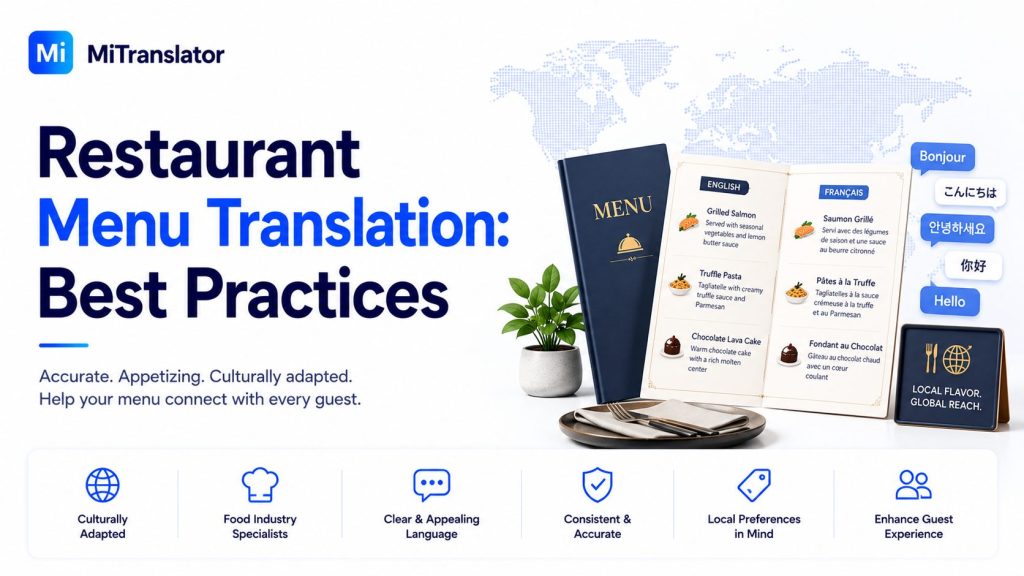
In today’s global hospitality industry, restaurants increasingly serve customers from diverse linguistic and cultural backgrounds. Whether catering to international tourists, expatriates, business travelers, or multicultural local communities, restaurants must ensure that their menus are clear, accurate, and appealing to all guests.
A poorly translated menu can create confusion, misrepresent dishes, and negatively impact the dining experience. In some cases, translation mistakes may even affect customer trust, food safety communication, or brand reputation. On the other hand, a professionally translated menu helps guests make informed choices, enhances customer satisfaction, and supports business growth.
This article explores the importance of restaurant menu translation, common challenges businesses face, best practices for achieving high-quality results, and how professional translation services can help restaurants attract international customers.
What Is Restaurant Menu Translation?
Restaurant menu translation is the process of converting menu content from one language into another while preserving the meaning, style, and appeal of each dish description.
Menus often contain a variety of content, including:
- Food and beverage names
- Ingredient descriptions
- Cooking methods
- Allergen information
- Promotional offers
- Seasonal specials
- Wine and cocktail lists
- Nutritional information
Unlike many other forms of business translation, menu translation combines linguistic accuracy with marketing and cultural adaptation. The goal is not only to communicate information but also to encourage customers to order.
Effective menu translation often involves localization. This means adapting descriptions, terminology, and cultural references so they make sense to customers from different countries and backgrounds.
For example, certain local ingredients or traditional Vietnamese dishes may require additional explanation for international diners unfamiliar with regional cuisine.
Why Restaurant Menu Translation Matters for Businesses
Improves the Customer Experience
Guests are more comfortable ordering when they clearly understand menu items. Accurate translations help customers make informed choices and enjoy a smoother dining experience.
Clear communication reduces confusion and minimizes ordering mistakes.
Attracts International Customers
Tourists and foreign residents often prefer restaurants that provide menus in their native language or in widely spoken languages such as English.
Multilingual menus make restaurants more accessible and welcoming to international guests.
Enhances Brand Image
Professional menu translations reflect a restaurant’s commitment to quality and customer service.
A well-translated menu creates a positive first impression and reinforces brand credibility.
Increases Sales Opportunities
Descriptive and appealing menu translations can encourage customers to try new dishes, premium offerings, and specialty items.
Effective translation supports upselling and cross-selling opportunities.
Supports Food Safety Communication
Accurate translations are essential when communicating allergen information, dietary restrictions, and ingredient details.
This helps restaurants reduce risks and improve customer confidence.
Strengthens Online Visibility
Many restaurants publish menus on websites, food delivery platforms, and social media channels. Multilingual content can help attract a broader audience and improve discoverability among international customers.
Common Challenges in Restaurant Menu Translation
Literal Translation of Dish Names
One of the most common mistakes is translating dish names word-for-word.
For example, some traditional dishes may have names that make little sense when translated directly. A literal translation can confuse customers and fail to communicate what the dish actually contains.
Cultural Differences in Food Terminology
Food terminology often varies across countries and cultures.
Ingredients, cooking methods, and serving styles that are familiar in one region may be unfamiliar to international diners. Translators must balance authenticity with clarity.
Inaccurate Ingredient Descriptions
Poor translations can result in incorrect ingredient information, potentially creating problems for customers with allergies or dietary restrictions.
Accuracy is particularly important when describing:
- Seafood
- Nuts
- Dairy products
- Gluten-containing ingredients
- Vegetarian or vegan options
Loss of Marketing Appeal
Menu descriptions often play a significant role in influencing purchasing decisions.
A translation that is technically accurate but lacks persuasive language may fail to encourage customer orders.
Inconsistent Terminology
Restaurants with large menus may use different translations for similar ingredients or cooking methods.
Inconsistencies can make menus appear unprofessional and confuse customers.
Frequent Menu Updates
Seasonal menus, special promotions, and new dishes require regular updates. Maintaining consistency across multiple language versions can be challenging without a structured translation process.
Best Practices for Restaurant Menu Translation
Prioritize Clarity Over Literal Translation
The primary goal of menu translation is helping customers understand what they are ordering.
Rather than translating every word directly, focus on conveying the meaning and characteristics of each dish clearly.
Use Professional Food and Hospitality Translators
Restaurant menus contain specialized culinary terminology and cultural references.
Professional translators with hospitality experience can accurately describe dishes while preserving their appeal.
Provide Context for Local Dishes
When translating traditional or regional dishes, include brief descriptions where necessary.
For example, instead of simply listing a local dish name, explain key ingredients or preparation methods to help international diners understand what to expect.
Standardize Culinary Terminology
Create multilingual glossaries covering:
- Ingredients
- Cooking techniques
- Beverage terminology
- Dietary labels
- Allergen information
Consistent terminology improves professionalism and customer understanding.
Adapt Content for Target Audiences
Different customer groups may require different levels of explanation.
For example:
- Tourists may need detailed descriptions.
- International business travelers may prefer concise information.
- Fine-dining customers may expect more sophisticated language.
Review Allergen and Dietary Information Carefully
Accuracy is critical when translating information related to:
- Allergies
- Vegetarian dishes
- Vegan options
- Halal meals
- Gluten-free items
Translation errors in these areas can have serious consequences.
Maintain Brand Voice
Whether a restaurant positions itself as casual, family-friendly, upscale, or luxury-focused, menu translations should reflect the brand’s personality and customer experience.
Restaurant Menu Translation Checklist
Before publishing a translated menu, verify that:
- Dish names are understandable.
- Ingredient descriptions are accurate.
- Culinary terminology is consistent.
- Allergen information is correct.
- Marketing language remains appealing.
- Cultural references have been localized.
- Quality assurance reviews have been completed.
How MITRANS Can Help
Restaurant menus are often the first point of interaction between diners and a restaurant’s offerings. Accurate and engaging translations can directly influence customer satisfaction, online reviews, and revenue.
MITRANS provides professional translation and localization services tailored to restaurants, hospitality businesses, food brands, and catering companies.
Our services include:
- Restaurant menu translation
- Food and beverage localization
- Allergen information translation
- Hotel restaurant menu translation
- Multilingual menu design support
- Hospitality content translation
- Food delivery platform localization
- Website translation for restaurants
- Marketing material translation
- Quality assurance and linguistic review
Our experienced translators understand culinary terminology, hospitality communication, and cultural adaptation requirements, ensuring that your menus are both accurate and appealing to international diners.
With expertise in English, Vietnamese, Chinese, Japanese, Korean, French, German, and many other languages, MITRANS helps restaurants deliver exceptional dining experiences to guests from around the world.
Frequently Asked Questions About Restaurant Menu Translation
Why is professional menu translation important?
Professional menu translation helps customers understand dishes accurately, improves dining experiences, enhances brand image, and reduces communication errors.
Should dish names always be translated?
Not necessarily. Some traditional dishes are best kept in their original language with a brief explanatory description to help international diners understand the dish.
What information should be included in translated menus?
Restaurants should translate dish names, descriptions, ingredients, allergen information, beverage listings, and promotional content where applicable.
How can restaurants maintain consistency across multilingual menus?
Using standardized culinary glossaries, translation memories, and professional translators helps ensure consistency across all menu versions.
Is localization necessary for menu translation?
Yes. Localization helps adapt menu content to cultural expectations and customer preferences while preserving the authenticity of the cuisine.
Need Restaurant Menu Translation Support?
Looking to attract international diners and provide a better multilingual dining experience for your guests?
Contact MITRANS today for fast, accurate, and professional restaurant menu translation and localization services tailored to restaurants, cafés, hotels, and hospitality businesses worldwide.