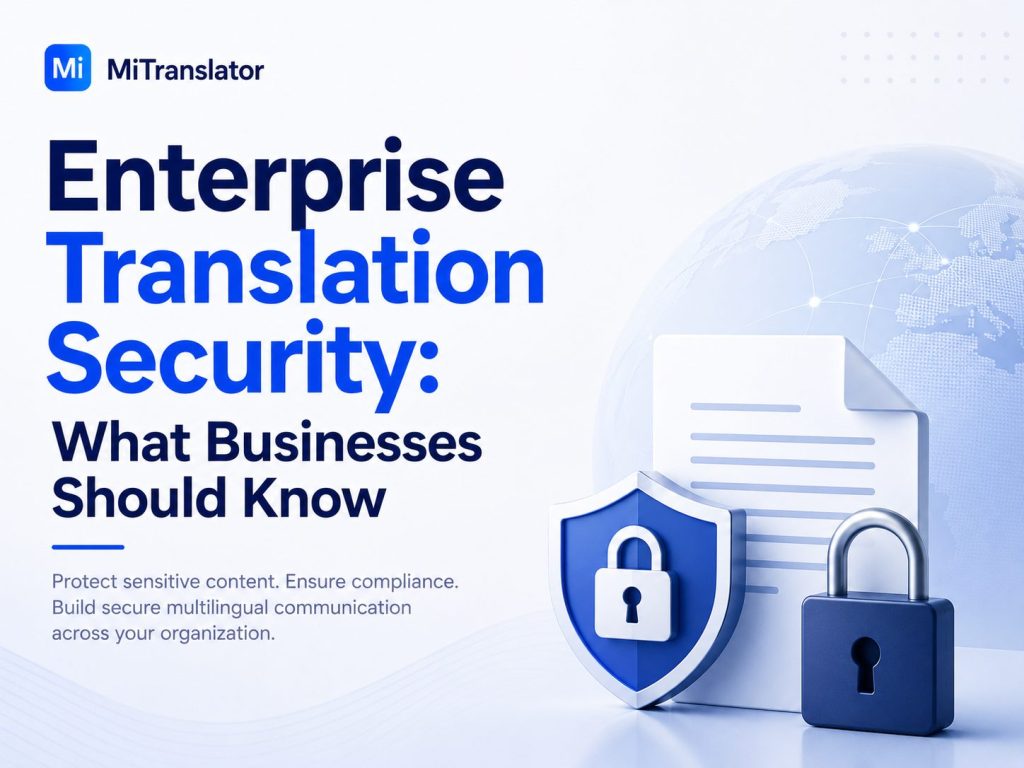
As businesses expand across international markets and manage multilingual operations at scale, translation security has become a major concern for enterprise communication. Modern organizations regularly share highly sensitive information during localization workflows, including legal contracts, financial reports, technical documentation, internal communication, customer data, and strategic business materials.
Without proper security controls, translation processes can expose businesses to:
- Data leaks
- Compliance violations
- Intellectual property risks
- Unauthorized access
- Operational disruption
- Reputational damage
For enterprises operating in Vietnam and global markets, translation security is no longer just an IT concern — it is a critical part of business risk management.
In this article, we explore why enterprise translation security matters, common risks organizations face, and best practices for building secure multilingual workflows.
Why Translation Security Matters for Enterprises
Enterprise localization workflows often involve:
- Multiple departments
- External vendors
- Cloud-based systems
- Translation APIs
- AI-assisted platforms
- International teams
Sensitive business information commonly translated includes:
- Legal agreements
- Financial records
- Compliance documentation
- Product specifications
- Technical manuals
- Employee communication
- Internal operational procedures
- Customer support content
If this information is mishandled, businesses may face significant operational and legal consequences.
Common Enterprise Translation Security Risks
Unsecured File Sharing
Using unsecured file-sharing methods or personal communication channels increases the risk of:
- Unauthorized access
- Data interception
- Lost files
- Confidentiality breaches
Enterprise workflows require secure systems for:
- File transfer
- Storage
- Access management
- Collaboration
Weak Access Control
Without structured permission management, sensitive multilingual content may become accessible to:
- Unauthorized employees
- External collaborators
- Unapproved reviewers
Enterprises should implement role-based access controls throughout localization workflows.
Public AI Translation Risks
Public AI translation tools may not always provide:
- Enterprise-grade privacy protections
- Controlled data handling
- Secure processing environments
Uploading confidential business information into unsecured systems may create:
- Compliance risks
- Confidentiality concerns
- Data exposure issues
Businesses should carefully evaluate AI translation security policies before use.
Inconsistent Vendor Security Standards
Translation providers may follow different operational security practices.
Potential risks include:
- Weak confidentiality policies
- Shared credentials
- Poor workflow management
- Insecure storage systems
- Uncontrolled subcontracting
Enterprises should assess vendor security standards before sharing sensitive information.
What Enterprise Translation Security Should Include
Secure File Management
Professional enterprise workflows should support:
- Encrypted file transfer
- Secure storage
- Controlled sharing
- Permission management
- Backup protection
- Audit logging
Secure infrastructure reduces operational risk during multilingual projects.
Confidentiality Agreements
Translation providers should support:
- Non-disclosure agreements (NDAs)
- Confidentiality policies
- Controlled reviewer access
- Secure communication procedures
This helps protect sensitive enterprise information across localization workflows.
Human QA Oversight
Human review improves not only translation quality, but also:
- Workflow governance
- Compliance management
- Sensitive content handling
- Contextual accuracy
Enterprise localization should balance AI efficiency with professional human oversight.
Translation Workflow Governance
Centralized localization management helps enterprises:
- Standardize security policies
- Control multilingual assets
- Monitor project access
- Improve operational consistency
Governed workflows reduce the risk of uncontrolled document handling.
AI Translation and Enterprise Security
AI-assisted translation systems help businesses:
- Scale multilingual operations
- Improve workflow speed
- Reduce turnaround time
- Automate repetitive tasks
However, secure enterprise AI workflows should also include:
- Controlled processing environments
- Data protection policies
- Human QA review
- Access management
- Compliance monitoring
The most effective enterprise systems combine:
- AI-assisted efficiency
- Human linguistic expertise
- Structured security governance
Industries With High Translation Security Requirements
Enterprise translation security is especially important for:
- Financial institutions
- Healthcare organizations
- Legal firms
- SaaS companies
- Manufacturing enterprises
- Government contractors
- Technology companies
- International corporations
These industries frequently manage confidential operational and customer information that requires strict protection.
Best Practices for Enterprise Translation Security
Establish Internal Security Policies
Businesses should create clear policies covering:
- Translation workflows
- File sharing
- AI system usage
- Vendor management
- Access permissions
- Data retention
Standardized policies improve security consistency across teams.
Limit Access to Sensitive Projects
Only authorized personnel should access confidential localization projects.
Best practices include:
- Role-based permissions
- Reviewer restrictions
- Workflow approvals
- Audit tracking
Evaluate Translation Vendors Carefully
Enterprises should assess:
- Security infrastructure
- Confidentiality procedures
- Human QA workflows
- Compliance awareness
- Data handling practices
Vendor security directly affects enterprise risk exposure.
Combine AI Translation With Human Review
AI translation improves scalability, but human review remains essential for:
- Security governance
- Quality assurance
- Compliance-sensitive content
- Localization accuracy
How MITRANS Supports Secure Enterprise Translation
MITRANS Translator provides enterprise-grade Vietnamese translation and localization solutions designed for secure multilingual business operations.
Our services include:
- Secure localization workflows
- Confidential business document translation
- AI-assisted translation with human QA
- Enterprise terminology management
- Controlled multilingual communication
- Operational localization support
MITRANS supports multiple language pairs, including:
- English ↔ Vietnamese
- Chinese ↔ Vietnamese
- Japanese ↔ Vietnamese
- Korean ↔ Vietnamese
- French ↔ Vietnamese
With professional linguists, quality-controlled workflows, and enterprise-focused localization systems, MITRANS helps businesses manage multilingual communication securely and efficiently.
Frequently Asked Questions
Why is translation security important for enterprises?
Translation workflows often involve confidential legal, financial, operational, and technical information that must be protected from unauthorized access and exposure.
Are public AI translation tools secure for enterprise use?
Businesses should carefully evaluate the security policies, privacy standards, and data handling procedures of any AI translation platform before using it for sensitive content.
What should enterprises look for in secure translation workflows?
Key security features include:
- Access control
- Secure file management
- Confidentiality agreements
- Human QA oversight
- Workflow governance
- Compliance-aware processes
Does MITRANS support secure enterprise localization?
Yes. MITRANS provides enterprise-focused translation workflows designed for secure multilingual communication and scalable localization operations.
Conclusion
As organizations continue expanding multilingual operations, enterprise translation security has become essential for protecting sensitive business information and maintaining operational stability.
From legal documentation and technical materials to customer communication and AI-assisted workflows, secure localization systems help enterprises reduce risk while supporting global business growth.
Need Vietnamese Translation or Localization Support?
MITRANS helps global businesses manage multilingual communication, localization, and Vietnamese market operations with quality-controlled translation workflows.
Contact MITRANS Translator today for fast, accurate, and professional language solutions tailored to your business.