
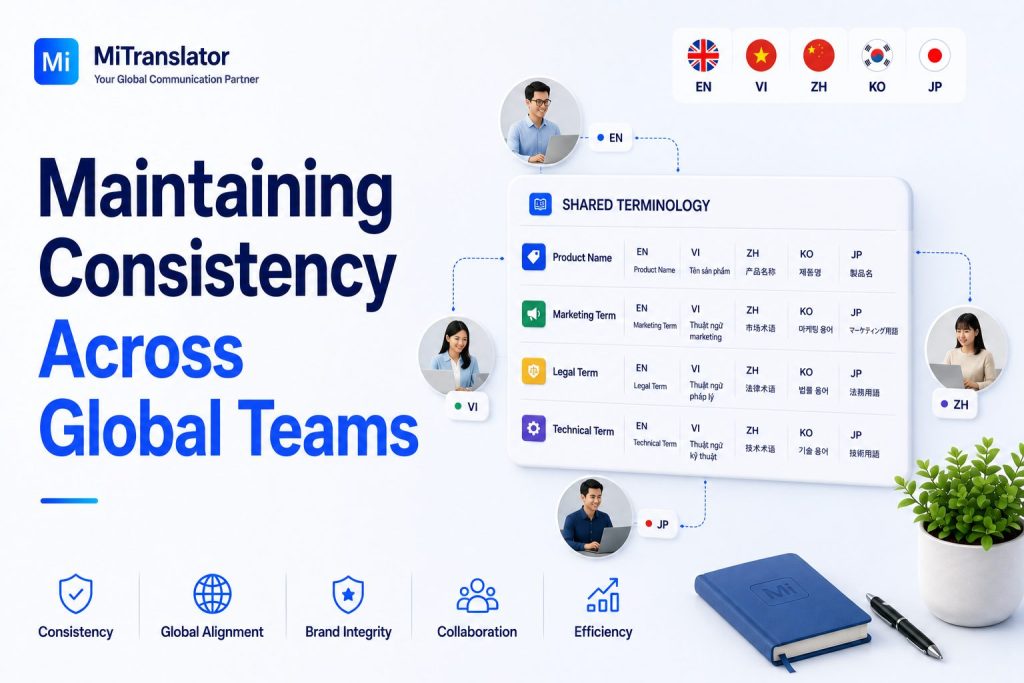
As organizations expand internationally, managing communication across multiple countries, languages, and cultures becomes increasingly complex. Global teams often collaborate on projects involving employees, partners, suppliers, and customers from different regions, each with their own language preferences, communication styles, and business practices.
Without a structured approach to communication and content management, inconsistencies can emerge across departments, locations, and markets. These inconsistencies can lead to misunderstandings, reduced productivity, brand confusion, and operational inefficiencies.
Maintaining consistency across global teams is essential for ensuring effective collaboration, strengthening brand identity, improving customer experiences, and supporting sustainable international growth.
Why Consistency Matters in Global Organizations
Improving Internal Communication
Global teams rely on clear and consistent communication to coordinate activities, share information, and achieve common objectives.
Consistent communication helps:
- Reduce misunderstandings
- Improve collaboration
- Streamline workflows
- Support decision-making
- Enhance team alignment
When employees receive consistent information, they can work more effectively regardless of location.
Strengthening Brand Identity
Organizations operating in multiple markets must maintain a unified brand image.
Consistency across global teams helps ensure that:
- Brand messaging remains aligned
- Marketing materials reflect the same values
- Customer communications follow approved standards
- Corporate identity remains recognizable worldwide
This strengthens customer trust and brand reputation.
Enhancing Customer Experience
Customers expect a consistent experience regardless of the market they interact with.
Consistent communication helps ensure that:
- Product information remains accurate
- Customer support follows the same standards
- Marketing messages are aligned globally
- Service expectations are clear
This contributes to higher customer satisfaction and loyalty.
Supporting Operational Efficiency
Inconsistent terminology, documentation, and processes can create confusion and increase administrative burdens.
Standardized communication practices help organizations operate more efficiently across regions.
Common Challenges Faced by Global Teams
Language Differences
Multinational organizations often operate in multiple languages.
Challenges may include:
- Translation inconsistencies
- Terminology variations
- Communication barriers
- Misinterpretation of information
Professional language management helps address these issues.
Cultural Differences
Communication styles vary significantly between cultures.
What works in one market may not be appropriate in another.
Organizations must balance global consistency with local cultural relevance.
Decentralized Content Creation
Different regional teams may independently create:
- Marketing materials
- Training content
- Product documentation
- Customer communications
Without clear guidelines, inconsistencies can quickly emerge.
Rapid Business Growth
As organizations expand into new markets, maintaining alignment becomes increasingly difficult.
New teams, products, and communication channels can introduce additional complexity.
Multiple Technology Platforms
Global organizations often use different systems across regions.
Disconnected tools can create challenges for content management and communication consistency.
Key Areas Requiring Consistency
Corporate Communications
Internal communications should maintain consistent:
- Messaging
- Tone
- Terminology
- Policies
- Strategic objectives
Employees across all locations should receive the same core information.
Marketing and Branding
Global marketing teams should align on:
- Brand voice
- Key messages
- Product positioning
- Visual identity
- Campaign objectives
Localization may adapt content for local audiences while preserving brand consistency.
Product Documentation
Technical documentation should maintain consistent terminology and messaging across:
- User manuals
- Technical specifications
- Safety instructions
- Product guides
Consistency improves usability and reduces confusion.
Customer Support Content
Support resources should provide uniform information regardless of language or market.
Examples include:
- FAQs
- Knowledge bases
- Help center articles
- Customer service scripts
Consistent support content improves customer experiences.
Training Materials
Organizations often develop training content for employees across multiple regions.
Consistency helps ensure that all teams receive the same knowledge and guidance.
Strategies for Maintaining Consistency Across Global Teams
Develop Global Communication Guidelines
Organizations should establish clear standards for:
- Language usage
- Tone of voice
- Brand messaging
- Content formatting
- Communication protocols
These guidelines help create alignment across departments and regions.
Implement Terminology Management
Approved terminology databases help ensure consistency across languages and markets.
Terminology management supports:
- Translation accuracy
- Brand consistency
- Technical precision
- Regulatory compliance
Use Translation Memory Technology
Translation Memory (TM) allows organizations to reuse previously approved translations.
Benefits include:
- Consistent terminology
- Faster project delivery
- Reduced translation costs
- Improved quality control
Centralize Content Management
A centralized content strategy helps prevent duplication and inconsistencies.
Organizations should maintain shared repositories for:
- Approved content
- Brand assets
- Translation resources
- Communication guidelines
Encourage Cross-Regional Collaboration
Regular communication between regional teams promotes alignment and knowledge sharing.
Collaboration helps identify inconsistencies before they become widespread issues.
The Role of Localization in Global Consistency
Consistency does not mean using identical content everywhere.
Localization allows organizations to adapt content for local audiences while preserving:
- Core brand values
- Strategic messaging
- Product information
- Customer experience standards
Effective localization balances global consistency with local relevance.
Technology That Supports Global Consistency
Translation Memory Systems
Translation Memory stores approved translations for future reuse.
This helps maintain consistency across multilingual content.
Terminology Management Platforms
These systems manage approved terminology and definitions across languages and departments.
Content Management Systems (CMS)
Centralized CMS platforms help organizations control content creation and distribution.
Collaboration Tools
Modern collaboration platforms improve communication and coordination among geographically dispersed teams.
Quality Assurance Tools
Automated quality checks help identify inconsistencies before content is published.
Best Practices for Global Teams
Create Clear Governance Structures
Define responsibilities for:
- Content creation
- Translation approval
- Brand management
- Quality assurance
Clear ownership improves accountability.
Standardize Processes
Consistent workflows help ensure quality and alignment across regions.
Conduct Regular Reviews
Periodic reviews help identify outdated content, terminology inconsistencies, and communication gaps.
Invest in Professional Translation and Localization
Experienced language professionals help maintain quality while supporting global communication objectives.
Monitor Performance
Organizations should track metrics related to:
- Content quality
- Translation consistency
- Customer feedback
- Internal communication effectiveness
Continuous improvement supports long-term success.
Global Consistency Checklist
Before implementing a global communication strategy, ensure that you:
✔ Develop communication guidelines
✔ Establish approved terminology databases
✔ Implement Translation Memory technology
✔ Centralize content management
✔ Standardize workflows
✔ Support cross-regional collaboration
✔ Maintain brand consistency
✔ Localize content appropriately
✔ Conduct regular quality reviews
✔ Measure communication effectiveness
How MITRANS Can Help
MITRANS helps multinational organizations maintain consistency across global teams through professional translation, localization, and language management services.
Our services include:
- Translation Memory management
- Terminology management
- Multilingual content translation
- Website localization
- Corporate communication translation
- Technical documentation translation
- Employee training content localization
- Brand language management
- Multilingual quality assurance
- Global content strategy support
Our experienced linguists and localization specialists help organizations communicate consistently across languages, markets, and regions while supporting international growth.
Frequently Asked Questions
Why is consistency important for global teams?
Consistency improves communication, strengthens brand identity, enhances customer experiences, and supports operational efficiency.
How can organizations maintain consistency across multiple languages?
Using terminology management, Translation Memory technology, communication guidelines, and professional localization services helps maintain consistency.
Does localization reduce consistency?
No. Effective localization adapts content for local audiences while preserving core messaging, branding, and strategic objectives.
What technologies support multilingual consistency?
Translation Memory systems, terminology management platforms, content management systems, and quality assurance tools all play important roles.
Which organizations benefit most from consistency management?
Any company operating across multiple countries, languages, or regions can benefit from structured consistency management practices.
Conclusion
Maintaining consistency across global teams is essential for successful international operations. Clear communication, standardized terminology, centralized content management, and professional localization all contribute to stronger collaboration and better business outcomes.
Organizations that invest in consistency management can improve efficiency, strengthen their brand, enhance customer experiences, and support sustainable growth in global markets.
Need Help Maintaining Consistency Across Global Teams?
Looking to improve multilingual communication, manage terminology, streamline localization workflows, or strengthen global brand consistency?
Contact MITRANS today to learn how our professional translation and localization solutions can help your organization communicate effectively across international markets and diverse teams.