
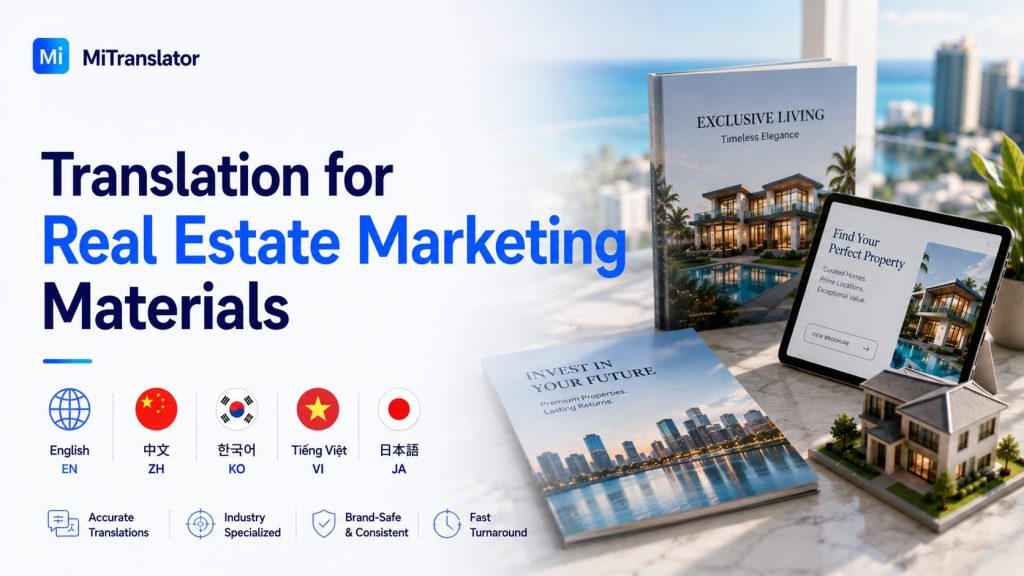
The real estate industry is increasingly global. Property developers, real estate agencies, investment firms, and property management companies regularly market residential, commercial, and mixed-use projects to international buyers, investors, and expatriates. As competition grows across local and global markets, effective communication has become a key factor in attracting qualified leads and closing transactions.
For international audiences, language barriers can significantly affect how potential buyers perceive a property or development project. Marketing materials that are poorly translated may create confusion, reduce credibility, and weaken a property’s appeal. On the other hand, professionally translated and localized content can help real estate businesses build trust, generate more inquiries, and connect with buyers across different markets.
This article explores the importance of translating real estate marketing materials, common challenges businesses face, best practices for achieving effective multilingual communication, and how professional translation services can support international real estate marketing efforts.
What Is Translation for Real Estate Marketing Materials?
Translation for real estate marketing materials involves adapting promotional and informational property content into different languages while maintaining accuracy, branding, and marketing effectiveness.
Real estate companies often need to translate a wide variety of content, including:
- Property brochures
- Project presentations
- Property listings
- Development websites
- Investment guides
- Sales presentations
- Email marketing campaigns
- Social media advertisements
- Floor plan descriptions
- Property management materials
- Landing pages
- Video subtitles and promotional content
Unlike legal real estate document translation, marketing translation focuses on attracting and persuading potential buyers or investors. The goal is to communicate the property’s value while creating an emotional connection with the target audience.
Localization is also a critical part of the process. Buyers from different countries often have unique expectations regarding property features, investment opportunities, lifestyle benefits, and purchasing decisions. Localized marketing content helps ensure that messages resonate effectively with each market.
Why Translation Matters for Real Estate Businesses
Expands Access to International Buyers
Many property developers and agencies target overseas investors and expatriates looking for residential or commercial opportunities.
Providing marketing materials in multiple languages helps businesses reach a wider audience and increase exposure in international markets.
Builds Trust and Professionalism
Real estate transactions often involve significant financial commitments.
Potential buyers are more likely to trust developers and agencies that provide clear, professional, and accurate information in their preferred language.
Improves Lead Generation
Multilingual marketing materials help eliminate language barriers that might prevent prospective buyers from making inquiries.
The easier it is for prospects to understand a property’s benefits, the more likely they are to engage with the business.
Enhances Customer Experience
Property buyers conduct extensive research before making purchasing decisions.
Translated brochures, websites, and property descriptions help customers understand key details without relying on external translation tools.
Supports International Property Sales
For projects targeting foreign investors, translation is often essential to the sales process.
Accurate multilingual marketing materials help sales teams communicate effectively and maintain consistency across different regions.
Strengthens Global Brand Presence
Professional localization helps real estate companies establish credibility and build stronger brand recognition across international markets.
This is particularly important for developers expanding beyond their domestic audience.
Common Challenges in Real Estate Marketing Translation
Literal Translation of Marketing Messages
Real estate marketing often emphasizes lifestyle, luxury, convenience, and investment potential.
Word-for-word translations can sound unnatural and fail to communicate the emotional appeal that drives purchasing decisions.
Cultural Differences in Property Preferences
Property buyers in different countries may prioritize different features.
For example:
- Investors may focus on rental yield and capital appreciation.
- Families may prioritize schools and community amenities.
- Luxury buyers may value exclusivity and premium services.
Marketing messages should be adapted accordingly.
Inconsistent Property Terminology
Real estate terminology can vary significantly between markets.
Terms such as:
- Condominium
- Apartment
- Penthouse
- Townhouse
- Mixed-use development
- Freehold
- Leasehold
must be translated consistently and accurately.
Translating Location-Specific Information
Neighborhood descriptions, transportation access, and local amenities often require additional context for international audiences unfamiliar with the area.
Frequent Project Updates
Real estate projects frequently undergo changes involving:
- Pricing
- Availability
- Construction progress
- Amenities
- Investment incentives
Maintaining consistency across multiple language versions can be challenging.
Balancing Accuracy and Marketing Appeal
Real estate content must remain factually accurate while also being persuasive.
Achieving this balance requires translators with both linguistic and marketing expertise.
Best Practices for Real Estate Marketing Translation
Prioritize Localization
Localization helps ensure that marketing materials reflect local cultural preferences and purchasing motivations.
Adapt content to match:
- Market expectations
- Investment priorities
- Communication styles
- Property-buying behaviors
Use Real Estate Industry Specialists
Work with translators who understand real estate terminology and industry-specific communication.
Specialized knowledge helps prevent costly translation errors and improves content quality.
Create Standardized Terminology
Develop multilingual glossaries covering:
- Property types
- Legal ownership structures
- Amenities
- Investment terminology
- Construction terminology
Consistency improves professionalism and customer understanding.
Focus on Buyer Benefits
Translate marketing messages based on benefits rather than literal wording.
Highlight features that matter most to the target audience while preserving the property’s unique selling points.
Optimize Multilingual SEO
Real estate websites targeting international buyers should include localized SEO strategies, such as:
- Market-specific keywords
- Localized property search terms
- Multilingual metadata
- Region-specific content
This helps attract qualified traffic from search engines.
Implement Quality Assurance Reviews
All translated marketing materials should undergo professional review to ensure:
- Accuracy
- Consistency
- Cultural relevance
- Brand alignment
Quality assurance protects brand reputation and improves marketing performance.
Real Estate Marketing Translation Checklist
Before publishing multilingual content, verify that:
- Property information is accurate.
- Marketing messages are localized.
- Real estate terminology is consistent.
- Investment-related information is clear.
- SEO content is optimized.
- Brand voice is maintained.
- Quality assurance reviews have been completed.
How MITRANS Can Help
Successful international real estate marketing requires more than simple translation. Property developers and agencies need content that accurately communicates value while engaging buyers across different cultures and languages.
MITRANS provides professional translation and localization services for real estate companies, property developers, investment firms, and property management organizations.
Our services include:
- Real estate brochure translation
- Property listing translation
- Development website localization
- Real estate marketing translation
- Investment guide translation
- Sales presentation translation
- Multilingual SEO localization
- Video subtitle translation
- Property management document translation
- Linguistic review and quality assurance
Our experienced translators understand both real estate terminology and international marketing principles, helping businesses communicate effectively with global audiences.
With expertise in English, Vietnamese, Chinese, Japanese, Korean, German, French, and many other languages, MITRANS helps real estate companies attract international buyers, improve lead generation, and expand into new markets.
Frequently Asked Questions About Real Estate Marketing Translation
Why is translation important for real estate marketing?
Translation helps real estate businesses reach international buyers, improve customer understanding, generate more leads, and support global sales efforts.
Which real estate materials should be translated?
Common materials include property listings, brochures, websites, sales presentations, investment guides, email campaigns, and social media content.
What is the difference between translation and localization in real estate marketing?
Translation converts content into another language, while localization adapts marketing messages to match cultural preferences and purchasing behaviors in specific markets.
Can multilingual content help attract foreign investors?
Yes. Investors are more likely to engage with projects when information is available in their preferred language and clearly explains investment opportunities.
Why should real estate companies use professional translators?
Professional translators ensure accuracy, maintain brand consistency, preserve marketing appeal, and help avoid misunderstandings that could affect buyer confidence.
Need Real Estate Translation and Localization Support?
Looking to attract international property buyers, investors, and expatriates with professional multilingual marketing materials?
Contact MITRANS today for fast, accurate, and professional real estate translation and localization services tailored to property developers, real estate agencies, and investment firms worldwide.