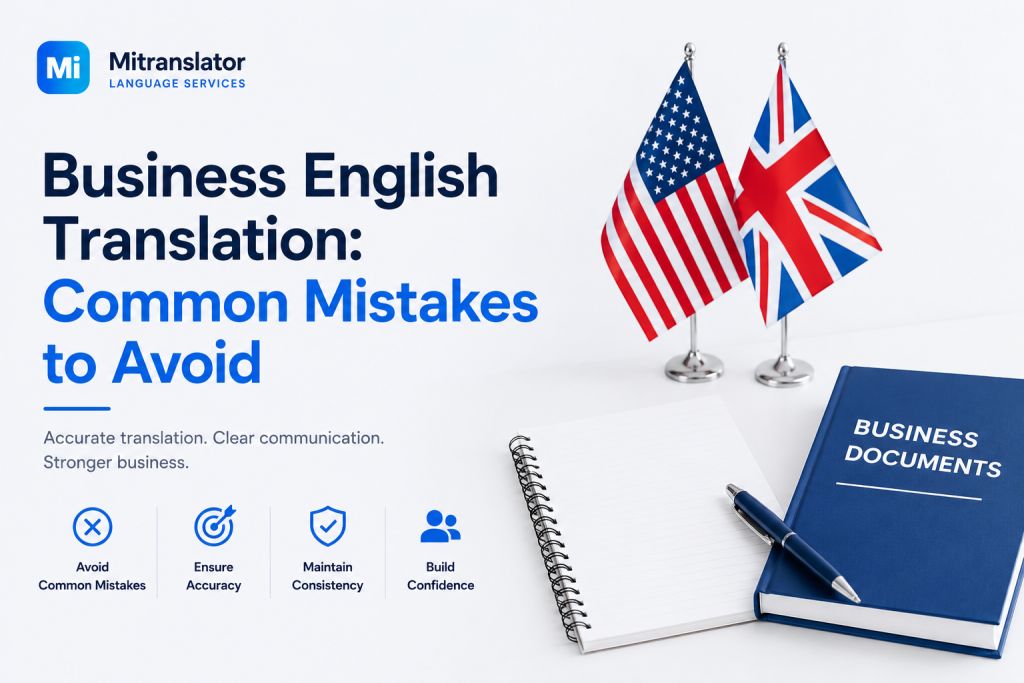
Business English translation plays a critical role in international communication, helping companies connect with global partners, clients, investors, and stakeholders. Whether translating contracts, emails, reports, marketing materials, or corporate documents, accuracy and professionalism are essential to ensure the intended message is communicated effectively.
However, many businesses underestimate the challenges involved in business translation. Even small errors can create misunderstandings, damage credibility, or lead to costly consequences. Understanding the most common business English translation mistakes can help organizations avoid unnecessary risks and achieve better communication outcomes.
What Is Business English Translation?
Business English translation refers to the translation of commercial, corporate, financial, legal, and professional documents into or from English for business purposes.
Common types of business documents include:
- Contracts and agreements
- Company profiles
- Financial reports
- Business correspondence
- Marketing materials
- Human resources documents
- Product catalogs
- Corporate presentations
- Import-export documentation
- Policies and procedures
Unlike general translation, business translation requires industry knowledge, cultural awareness, and familiarity with professional terminology.
Why Accurate Business English Translation Matters
Protecting Business Reputation
Well-translated documents demonstrate professionalism and attention to detail. Poor translation can create a negative impression and reduce trust among clients and partners.
Supporting International Communication
Accurate translation helps businesses communicate effectively across languages and cultures, reducing misunderstandings and improving collaboration.
Minimizing Legal and Financial Risks
Mistakes in contracts, compliance documents, or financial reports can lead to disputes, regulatory issues, or financial losses.
Improving Business Opportunities
Professional translation allows companies to present their products, services, and corporate image clearly to international audiences.
Common Business English Translation Mistakes to Avoid
Translating Word-for-Word
One of the most common mistakes is translating content literally without considering context. Direct translations often fail to convey the intended meaning and may sound unnatural in the target language.
For example, business expressions, idioms, and industry-specific phrases often require adaptation rather than direct translation.
Misusing Business Terminology
Business documents frequently contain specialized terminology related to finance, law, logistics, manufacturing, technology, and human resources.
Using incorrect terms can lead to confusion and affect the accuracy of the document. Translators should understand the relevant industry and maintain consistent terminology throughout the translation.
Ignoring Cultural Differences
Business communication styles vary across countries and cultures. A message that is appropriate in one market may not be suitable in another.
Professional translators consider cultural expectations and communication norms to ensure the translated content resonates with the target audience.
Inconsistent Terminology
Large projects often involve multiple documents and contributors. Without proper terminology management, the same term may be translated differently throughout the content.
This inconsistency can confuse readers and reduce the professionalism of the document.
Overlooking Grammar and Formatting
Translation accuracy goes beyond vocabulary. Grammar, punctuation, formatting, dates, numbers, currencies, and units of measurement must also be reviewed carefully.
Even minor formatting mistakes can affect readability and credibility.
Relying Solely on Machine Translation
Machine translation tools can be useful for basic understanding, but they often struggle with business terminology, context, and tone.
Documents such as contracts, financial reports, and corporate communications typically require professional human review to ensure accuracy.
Failing to Proofread the Final Document
Translation is only one part of the process. A thorough proofreading and quality assurance review helps identify errors, inconsistencies, and formatting issues before delivery.
Skipping this step can result in avoidable mistakes appearing in important business documents.
Best Practices for High-Quality Business English Translation
Use Professional Business Translators
Experienced translators understand business terminology, industry standards, and professional communication requirements.
Develop a Terminology Glossary
Creating a glossary of approved business terms helps maintain consistency across documents and projects.
Implement Quality Assurance Procedures
A reliable translation process should include:
- Translation
- Editing
- Proofreading
- Terminology verification
- Final quality review
Consider the Target Audience
Translations should be adapted to the audience’s language preferences, cultural expectations, and business environment.
Review Documents Before Publication
Final review ensures that all content is accurate, consistent, and professionally presented.
How MITRANS Helps Businesses Avoid Translation Mistakes
MITRANS provides professional business English translation services for companies operating in international markets. Our experienced linguists understand the importance of accuracy, consistency, and professionalism in business communication.
MITRANS supports the translation of:
- Business contracts and agreements
- Financial and accounting documents
- Corporate communications
- Company profiles
- Marketing materials
- Human resources documentation
- Import-export paperwork
- Technical and operational documents
Through a rigorous quality control process, MITRANS helps businesses avoid common translation errors and communicate confidently with global partners.
Frequently Asked Questions
Why is business English translation different from general translation?
Business translation requires specialized knowledge of professional terminology, industry practices, and corporate communication standards.
Can machine translation be used for business documents?
Machine translation may assist with basic understanding, but important business documents should be reviewed by professional translators to ensure accuracy and reliability.
What types of business documents require professional translation?
Contracts, financial reports, company profiles, business correspondence, marketing materials, and compliance documents often require professional translation.
How can businesses ensure translation consistency?
Using professional translators, maintaining terminology glossaries, and implementing quality assurance procedures help ensure consistency.
Does MITRANS provide industry-specific business translation?
Yes. MITRANS supports a wide range of industries, including finance, manufacturing, technology, healthcare, logistics, construction, and international trade.
Contact MITRANS for Business English Translation Services
Accurate translation is essential for effective business communication and international success. If your company needs reliable Business English translation for contracts, financial reports, company profiles, marketing materials, corporate communications, or other professional documents, MITRANS is ready to support you.
Contact MITRANS today for fast, accurate, and professional Business English translation services tailored to your business needs.